Best Lithium Battery for Solar Systems: A Complete Buying Guide (2026)

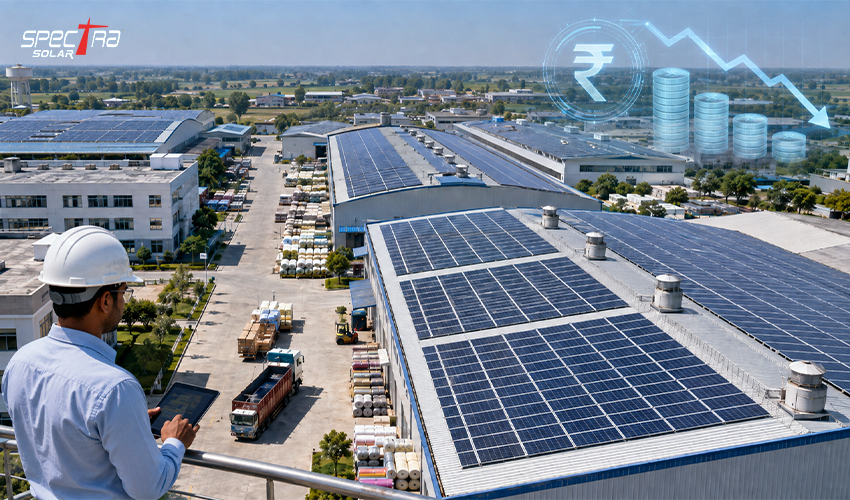
In the 2026 Indian energy landscape, switching to lithium solar batteries is no longer just a "tech-forward" choice; it is a calculated financial move. As grid tariffs continue to climb and the reliability of the traditional electrical backbone fluctuates, the ability to store and manage your own power determines the true ROI of your solar installation.
Whether you are eyeing a Solar panel for residential backup or a high-capacity solar panel for industry in India, your battery choice is the technical pivot point between a system that merely functions and one that actually thrives.
At Spectra Solar Power, we have seen that while panels get the glory, the battery does the heavy lifting. A high-quality lithium battery for solar system integration allows you to bypass the limitations of older lead-acid technology. It offers a more compact, efficient, and longer-lasting heart for your energy setup, specifically engineered to survive the rigours of the modern Indian climate.
Lithium Battery for Solar Panel: Why Chemistry Matters
Not all lithium is created equal. In 2026, the market has stabilised around two primary chemistries, each serving a distinct purpose in our local environmental context.
1. LiFePO4 (Lithium Iron Phosphate)
This is the undisputed heavyweight for stationary storage in India. LiFePO4 is celebrated for its safety—it is virtually immune to thermal runaway even in the blistering heat of a North Indian summer. With a lifecycle often exceeding 5,000 to 6,000 charges, it is essentially a "set it and forget it" solution for the next decade.
- Best For: Off-grid solar system setups and large-scale industrial storage.
- Thermal Threshold: Resists temperatures up to 270°C before showing signs of stress..
2. NMC (Nickel Manganese Cobalt)
NMC packs are all about energy density, shoving more power into a tight, lightweight frame. While the thermal management needs to be top-tier, they are the obvious pick for high-end urban homes where every square foot of floor space counts.
- Best For: Compact commercial solar rooftop systems and residential "Smart Homes."
- Density Advantage: Provides roughly 30–50% more energy storage per kilogram compared to LFP.

The "Brain" of the System: Why the BMS is Non-Negotiable
A lithium battery for a solar system is only as good as its Battery Management System (BMS). In 2026, a basic BMS isn't enough. You need an active system that manages:
- Cell Balancing: Lithium packs consist of multiple individual cells. Without active balancing, one "weak" cell can limit the capacity of the entire pack.
- Thermal Throttling: During the Indian peak summer, a smart BMS will slightly reduce the charging speed to keep internal temperatures safe, preventing the degradation of the electrolyte.
- State of Health (SoH) Monitoring: Modern Spectra systems provide real-time data to your phone, telling you not just how much charge you have, but how much "life" is left in the battery chemistry.
Battery Capacity Calculation for Solar System: The Spectra Method
Getting your battery sizing calculation for a solar system right is a technical art. Over-provisioning wastes capital, while under-provisioning leads to "blackout anxiety." To ensure your lithium battery for solar lasts, we use a multi-step verification process:
- Identify Your "Critical Load": List the appliances that must run during a power cut. Don't just look at total watts; look at "surge" watts for items like water pumps or AC compressors.
- Calculate Total Watt-Hours: Multiply the total wattage of these items by the number of hours you need them to run autonomously.
- The Lithium Advantage (DoD): Unlike lead-acid, which you can only safely drain by 50%, a solar lithium battery handles an 80–95% Depth of Discharge (DoD) without chemical degradation.
-
The Formula:
Usable Capacity (kWh) =Daily Wh Load × Days of Autonomy 1000 × Efficiency Index (0.95)
If you want to skip the manual math, our Solar panel maintenance services team provides a digital load-profiling audit. We use IoT-based sensors to map your actual consumption patterns over a 48-hour window, creating a custom blueprint for your storage needs.
On-Grid vs. Off-Grid: Strategic Storage in 2026
Your storage strategy changes based on your connection to the utility provider and the current Solar Billing regulations.
- On-Grid Solar System: In 2026, the trend is "Grid-Assisted Storage." Even with Net Metering, homeowners are installing small lithium buffers to manage "Peak Shaving." This means using your stored solar power on an on-grid solar system during the hours when grid rates are at their highest (ToU billing), rather than selling it back to the grid for a lower credit.
- Off-Grid Solar System: Here, your lithium battery for the solar system is your only lifeline. Reliability is paramount. For off-grid solar systems, we recommend modular lithium stacks. This allows you to "hot-swap" modules or expand your capacity as your energy needs grow, without replacing the entire bank.

What Is the Real Off-Grid Solar System Price?
When evaluating the Off-Grid Solar System price, look past the initial invoice. A lithium setup carries a higher "sticker price" but a significantly lower "Total Cost of Ownership" (TCO).
| Metric | Tubular Lead-Acid | Spectra Lithium (LiFePO4) |
|---|---|---|
| Usable Energy | 50% | 90% |
| Charge Speed | 8–12 Hours | 2–3 Hours |
| Space Required | High (Vented Room) | Low (Wall-Mountable) |
| Maintenance | Distilled water top-ups | Zero Maintenance |
| Replacement Cycle | Every 3–4 Years | Every 12–15 Years |
Investing in a lithium battery for solar today prevents the recurring headache of replacement and the hidden costs of electrolyte maintenance. In industrial settings, this also eliminates the need for expensive ventilation systems required to clear the off-gassing produced by lead-acid banks.
The Future: Vehicle-to-Home (V2H) Integration
Moving through 2026, we’re seeing a real convergence between how we power our cars and how we run our homes. The newest wave of lithium solar batteries is shifting toward bidirectional charging, turning your driveway and your battery room into a two-way street for energy.
This means your electric vehicle (EV) can act as a giant backup battery for your home during extended power outages, seamlessly integrating with your Solar panel for a residential setup. At Spectra Solar Power, we are already designing systems that are "V2H-ready," ensuring your hardware won't be obsolete in two years.
Spectra Solar Power: Engineering the 2026 Standard
As the best solar panel company in India, we don't just "install" batteries; we integrate smart energy ecosystems. Every Lithium Battery for Solar Panel we deploy comes with an Advanced BMS that communicates directly with your hybrid inverter via CANbus or RS485 protocols.
This deep integration prevents "cell drifting"—the leading cause of lithium failure in DIY or unbranded setups—ensuring your investment stays healthy for well over a decade. We ensure that the benefits of using solar power are protected by hardware that can withstand voltage surges and frequency shifts common in the Indian grid.

Don't let your energy future depend on an outdated battery. Take control of your power today.
Ready for a technical consultation? Reach out to Spectra Solar Power and let’s map out a lithium setup that actually hands you the keys to your energy independence. We don't just "supply" hardware; we design and install custom ecosystems that match your pace, delivering the kind of silent, unfailing power that stays reliable for years to come.

Share This Article


Ready to switch to solar?
Get a free site assessment and no-obligation proposal within 48 hours. Our team covers 100+ cities across India.
-
 Plot No. 2, Landmark Tower, 2nd Floor, South City-1, Ashok Marg, Gurugram, 122001, Haryana
 -

-

RELATED BLOGS