IITs to Village Schools: Why Educational Institutes Are Going Solar

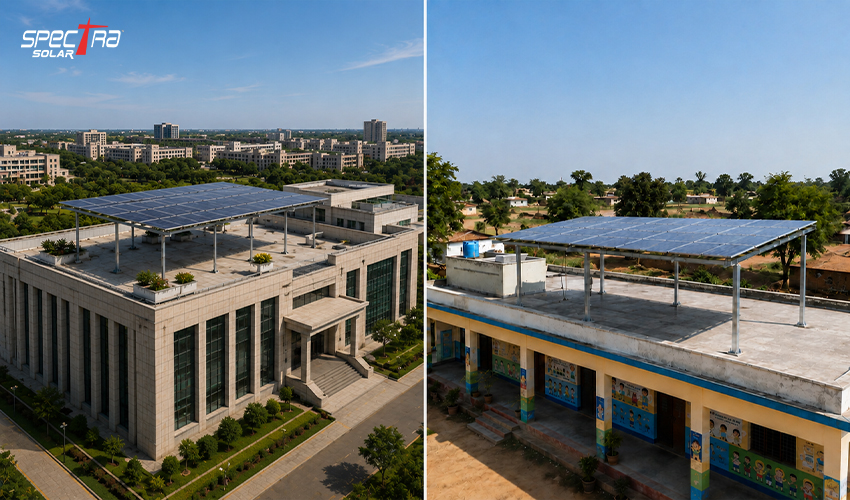
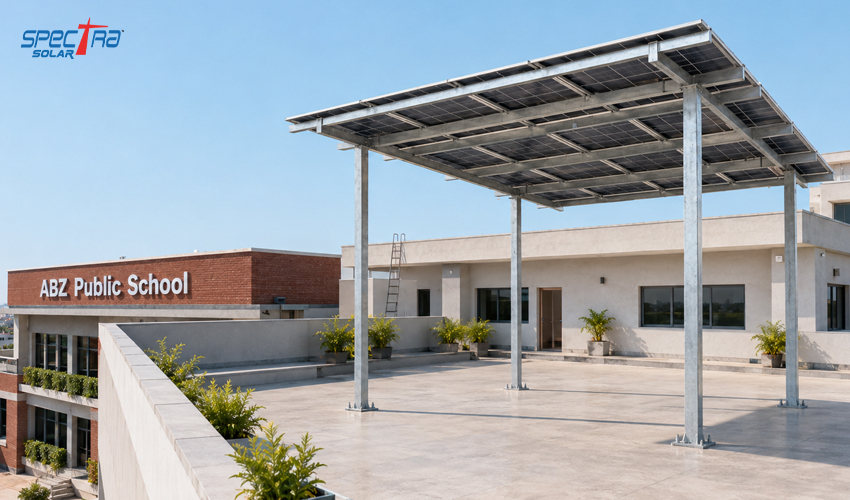
Rooftop solar's turned into a pretty ordinary sight on Indian campuses at this point, and it's not just the big names anymore. Solar for educational institutions now spans IIT Roorkee's megawatt-scale rooftop array all the way down to a 40 kW setup on a rural ITI in UP. Weirdly, the reasons behind both are pretty much identical. Power's getting pricier, state policy keeps pushing institutions this direction, and campuses run on exactly the hours panels put out the most electricity anyway.
What's Actually Driving This Shift?
Educational institutions across India, from premier institutes like IIT Roorkee down to village-level ITIs and schools in Uttar Pradesh, are going solar because daytime classroom and lab usage matches solar generation hours, state policies like UP's specifically target schools for solarization, and models like RESCO let institutions do this without paying for the system upfront.
Key Takeaways
-
IIT Roorkee's 1.8 MW rooftop system offsets around 15% of the campus's daytime peak demand.
-
SECI's been tendering rooftop solar across IITs, NITs and universities nationwide, recent bids came in as low as ₹3.04 a unit.
-
UP's state solar policy names schools and educational institutions directly as solarization targets, right alongside government buildings and Anganwadi centres.
-
UPNEDA's already put 40 kW rooftop systems on 60 state ITIs, mostly rural, with more on the way.
-
RESCO is what actually makes this accessible for budget-tight institutions, since it removes the upfront cost entirely.
Why Are Educational Institutions Turning to Solar?
It's mostly timing, if you break it down. Classes, labs, hostels, basically the whole day runs during daylight, which is exactly when panels are pumping out the most power, so there's barely any waste. Then stack rising DISCOM tariffs on top plus a growing pile of state policy actually pushing this along, and yeah, it stops feeling optional real fast.
This isn't some fringe move either. Take IIT Roorkee's 1.8 MW rooftop plant, the largest of any IIT campus. It's offsetting roughly 15% of the institute's grid draw right now. About 2,320 tonnes of carbon are cut per year on top of that. Not symbolic at all, that's a genuinely large slice of a big campus's daily power bill just... not there anymore.
From IITs to ITIs: The Scale Changes, the Logic Doesn't
Up at the top, institutions are putting up systems in the hundreds of kilowatts, sometimes crossing into full megawatts. SECI awarded rooftop tenders not long ago across IIT Indore, IGNOU, NIT Puducherry and IIM Shillong, with bids landing as low as ₹3.04 a unit and a 25-year O&M contract folded right into the deal. That structure, honestly, isn't far off from RESCO, just run through a central tendering body instead of a developer showing up directly.
Down at the other end, UP's got 40 kW rooftop systems on 60 state ITIs already up and running, mostly rural, and there's more coming across the roughly 305 ITIs operating in the state, serving over a lakh students total. None of these are flagship campuses with some dedicated sustainability fund sitting around. Village and small-town institutes, going solar mainly because the grid connection they've got isn't exactly something you'd trust with lab equipment.

UP: What the State Policy Actually Says
Solar for schools in UP isn't hiding in a footnote somewhere, it's written straight into policy. The Uttar Pradesh Solar Energy Policy 2022 flat out names schools, government colleges and technical institutions as solarization targets, right there with government buildings and Anganwadi centres, and it opens up net metering to every educational institution in the state.
Commercial solar in UP has been picking up pace under that same policy too, the state's chasing 1,500 MW through non-residential rooftop projects alone. Line that up next to climbing DISCOM tariffs and, well, it's not exactly a mystery why solar panels in UP adoption's rising at the big campuses and the small rural institutes at roughly the same time.
How Institutions Actually Fund These Projects
|
Funding Route |
How It Works |
Best Fit |
|
Direct CAPEX |
Institution pays full cost upfront, owns the system |
Institutions with capital or grant funding available |
|
Central/state tender |
A body like SECI or UPNEDA manages procurement and the O&M contract |
Public institutions plugged into central schemes |
|
RESCO solar model |
A third-party developer funds, owns and maintains the plant, institution just pays per unit |
Budget-tight schools with no capex line for solar |
The RESCO solar model, at the end of the day, is what actually makes this doable for schools and colleges without spare capital just sitting around waiting, which, let's face it, describes most of them. The developer eats the installation cost, the maintenance, the operational risk, all of it. The institution just pays for what it uses, typically well below whatever the local DISCOM's charging.

Why This Matters Beyond the Electricity Bill
For institutions out in rural or semi-urban areas, grid reliability usually matters more than the tariff number itself, if we're being honest. A rooftop system that keeps lab equipment running through an outage means a lot more to a vocational institute than any carbon figure ever will, even though the savings are genuinely there too. Premier institutes tend to lean more toward long-term cost predictability, plus whatever sustainability angle fits their reputation. But strip all that away and the math's identical everywhere you look, cheaper power showing up exactly when it's needed.
The same logic doesn't stop at education either. Solar panels for commercial buildings running office hours pick up the same benefit, and even a solar panel for residential property grabs a piece of it, though smaller and less predictable household load tends to stretch out the payback compared to an institution running steady daytime hours.
What It Actually Takes to Get a Project Off the Ground
Getting from "we should probably do this" to an actual commissioned system really comes down to three things. A rooftop survey checking structural load and shading. A funding call, capex, tender, or RESCO. And somebody who can actually push DISCOM approvals and net metering paperwork through without the institution's own staff having to deal with it.
That last bit's usually where things stall. Not because nobody wants solar, just because nobody on staff has the time to chase net metering approvals through a state DISCOM on top of whatever their actual job already is. Working with an established solar EPC company in India that handles the site assessment, installation and DISCOM coordination start to finish just takes that whole headache off the table.
Where Spectra Fits In
Spectra Solar Power works with commercial, industrial and institutional clients across Uttar Pradesh, RESCO-model rooftop projects included, so schools and colleges can go solar without putting up capital of their own. From the site assessment through ALMM-compliant installation and DISCOM coordination, the whole point is getting an institution from "interested" to "actually generating power" without dumping the paperwork on staff who've already got plenty going on.
Get in touch with Spectra Solar Power for a free rooftop assessment and see what a solar plan, RESCO or otherwise, would actually look like for your campus.
Frequently Asked Questions
1. Is rooftop solar only realistic for large institutions like IITs?
Not really. UP alone has already put rooftop systems on 60 rural ITIs, far smaller and less resourced than a premier IIT campus. Scale changes, the economics don't.
2. What's the difference between a government tender and RESCO?
A government tender, like SECI's, has a central body managing procurement and awarding a contract to a developer, often with a similar zero-capex setup to RESCO. A private RESCO deal works the same way, just negotiated directly between the institution and the developer.
3. Does UP have a specific policy covering solar for schools?
Yes. The UP Solar Energy Policy 2022 names schools, government colleges and technical institutions as solarization targets and gives net metering access to every educational institution in the state.
4. How much can an institution actually offset with rooftop solar?
Depends on system size and campus load, but IIT Roorkee's 1.8 MW system currently offsets around 15% of the institute's grid draw, a decent benchmark for a large campus.
Not necessarily. They can also wo
5. Do smaller institutions need to go through SECI or a state tender to get solar?
rk directly with a private EPC or RESCO developer instead of waiting on a central tender cycle, which is usually faster for a single campus.
6. Is solar viable for institutions in rural areas with unreliable grid power?
Often even more viable than in cities, since a rooftop system cuts down on dependence on a grid connection that's already unreliable, on top of the usual cost savings.

Share This Article


Ready to switch to solar?
Get a free site assessment and no-obligation proposal within 48 hours. Our team covers 100+ cities across India.
-
 Plot No. 2, Landmark Tower, 2nd Floor, South City-1, Ashok Marg, Gurugram, 122001, Haryana
 -

-