Government Grid-Connected Rooftop Solar Programme: A Complete Guide

Everyone’s talking about green energy like it’s this distant future thing, but honestly, it is happening right now on roofs all over the country. Most of it is actually because of the Government Grid-Connected Rooftop Solar Programme. It’s basically a massive plan to stop depending only on big power plants and let us make our own electricity.
By turning a boring terrace into a power station, you stop stressing over those monthly bills. It’s a huge move for anyone with a roof, and really, you should get a handle on what are the major solar panel components and their functions before you spend a single rupee, so you know what you're actually getting.
What is a Grid-Connected Solar Rooftop System Anyway?
Before you get tangled in government forms, you’ve got to understand how the tech sits in your house. A grid-connected setup is just a solar plant that "talks" to the local power lines all day. It’s not like those old-school systems with massive, heavy batteries that cost more than the car. Instead, the main grid acts like a giant battery that never runs out.
The panels catch the sun, turn it into power, and an inverter makes it work for your AC or fridge. If you’re out of the house and your panels are making more than you need, that extra juice goes back to the street. At night or when it’s pouring rain, you just pull power from the grid like normal.
Everything is tracked by a net meter, so you only pay for the "net" difference at the end of the month. This is exactly why people keep searching for the best solar system for home price because the math just works out. But seriously, don’t just set it and forget it—keep an eye on 10 signs your solar panels need maintenance because a bit of dust can really kill your savings.
Getting that MNRE Solar Subsidy and the Subsidy Under the PM Surya Ghar

The government is basically paying for a huge chunk of the cost now. The Ministry of New and Renewable Energy has this MNRE solar subsidy that just got a massive boost with the subsidy under the PM Surya Ghar Muft Bijli Yojana. The whole goal of this solar energy government scheme is to get solar on one crore homes. That is a crazy high number!
Right now, the cash help is really solid for regular homes. If you put up a 2 kW system, the government gives you about ₹30,000 for every kilowatt. If you go for 3 kW, that last kilowatt gets you another ₹18,000. So you end up with ₹78,000 in your pocket.
They’ve capped it there so more people can get a slice of the pie. If you're looking at state-wise solar subsidies, some states even add extra money on top. It’s a good idea to check how to calculate solar panel system roi because, with these subsidies, the system pays for itself way faster than you’d think.
Using the RTS Portal without a Headache
Everything is digital now, which is a relief. The RTS portal is basically the one-stop shop where you register, apply, and track your money. You just need your consumer number from your bill and a phone. Once you’re in, the local power company (DISCOM) checks if your roof and the local lines are okay with it.
If they say yes, you have to pick a vendor from the government's approved list.This is the part people mess up. If you pick a random guy who isn’t empanelled, you won't get any MNRE solar subsidy at all.
After the panels are installed and the new meter is on, the subsidy money hits your bank account in about a month. It’s a pretty smooth flow that shows why solar energy is the future of India's power needs. It’s making sure regular families can actually afford to own their power.
Commercial Solar Rooftop Systems for the Big Players
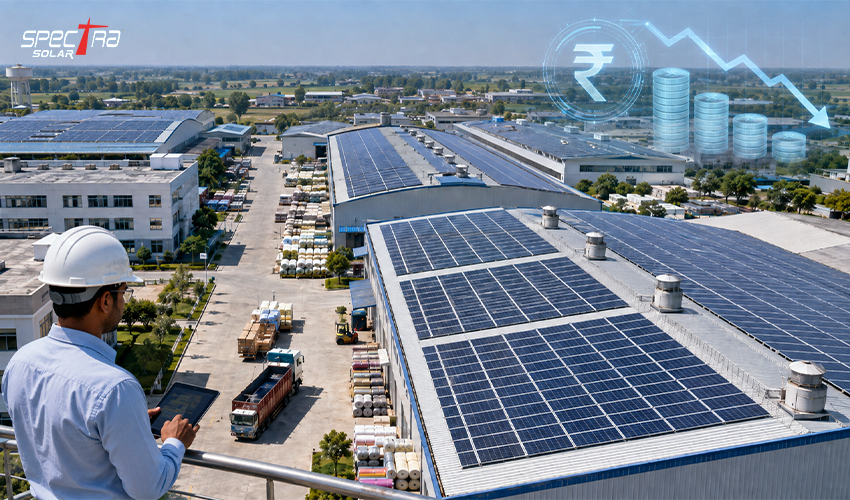
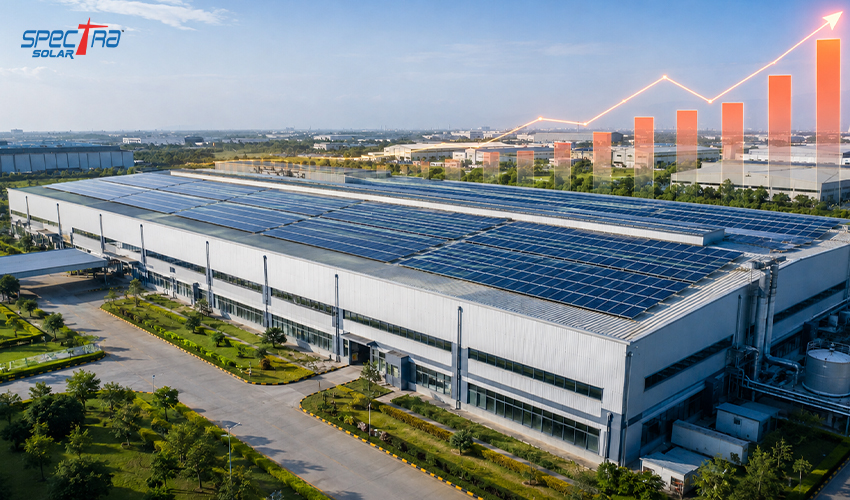
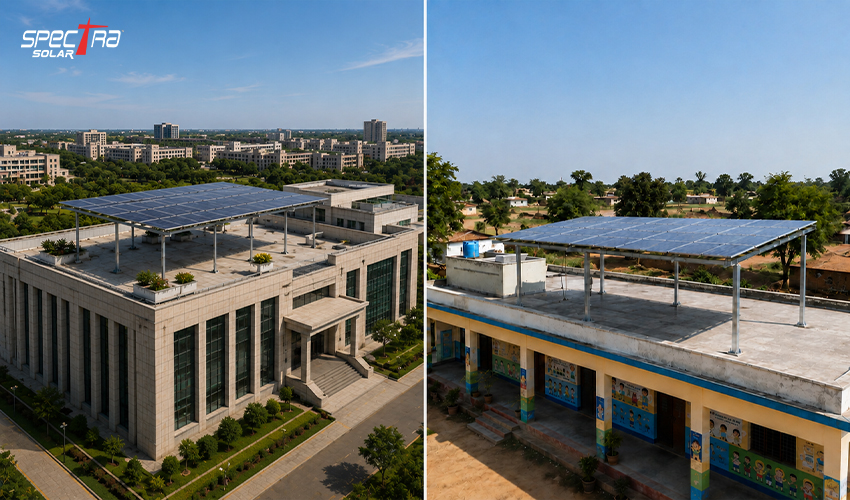
While most people talk about homes, businesses are actually making the biggest moves. Commercial solar rooftop systems are standard now for hospitals or schools that use tons of power during the day. For a factory, getting a solar panel for industry in India is a way to freeze your power costs for 25 years.
Factories usually run when the sun is brightest, so they use the power right when it’s being made. This cuts out those nasty peak-hour charges. Plus, the tax benefits for a solar panel for industry in India are a total game-changer for the accounts department.
If you want to see the real numbers, you should look at a Case study: industrial installation cost breakdown. It’s pretty wild to see how much a small factory can save when they stop relying purely on the grid.
Don't Skip the Solar Panel Maintenance Services

One thing people always forget after the installers leave is that panels need a little bit of care. They’re tough, but they aren't magic. Dust, bird droppings, and even smog can build up a layer of "gunk" that blocks the sun.
That’s why you need solar panel maintenance services now and then. If you don't clean them, you might lose 25% of your power just because of dirt. Professional solar panel maintenance services use demineralised water and check the wires to make sure nothing is loose.
A system should last 25 years, so a quick check-up is a tiny price to pay. Beyond just a wash, the long term maintenance benefits of solar mean you catch small wire issues before they turn into a full system blackout.
Finding the Top Solar Company in India
There are so many companies now that it’s easy to get overwhelmed. Finding the top solar company in India isn't just about the lowest price you see on a Facebook ad. You need a team that knows the rules and won't disappear when you have a question.
A real partner helps you with all that RTS portal paperwork and does a proper survey of your terrace. They won't just slap panels on; they’ll make sure they face south and are bolted down so they don't fly off in a storm. This is how you avoid 5 mistakes to avoid when buying solar panels for your home, like buying cheap, unbranded stuff.
Why Spectra Solar Power is Different?
Switching to solar is a big deal, and at Spectra Solar Power, we know it can be a bit scary. We focus on stuff that actually lasts, not just what’s cheap today. Whether you want a small solar system for a home price that works or a massive project for a warehouse, we’ve been at this long enough to know the tricks.
We handle the boring stuff, like the subsidy under the PM Surya Ghar forms, so you don't have to. And we stay around; our solar panel maintenance services keep your investment humming for years.
You should definitely look at how to apply for net metering in India: state wise explanation on our site to see the rules for your specific area. We want to make sure you get a system that fits your actual life, not just a generic box.
Divanshi Gupta


Share This Article


Ready to switch to solar?
Get a free site assessment and no-obligation proposal within 48 hours. Our team covers 100+ cities across India.
-
 Plot No. 2, Landmark Tower, 2nd Floor, South City-1, Ashok Marg, Gurugram, 122001, Haryana
 -

-

RELATED BLOGS