How to Apply for Net Metering in India: State Wise Explanation

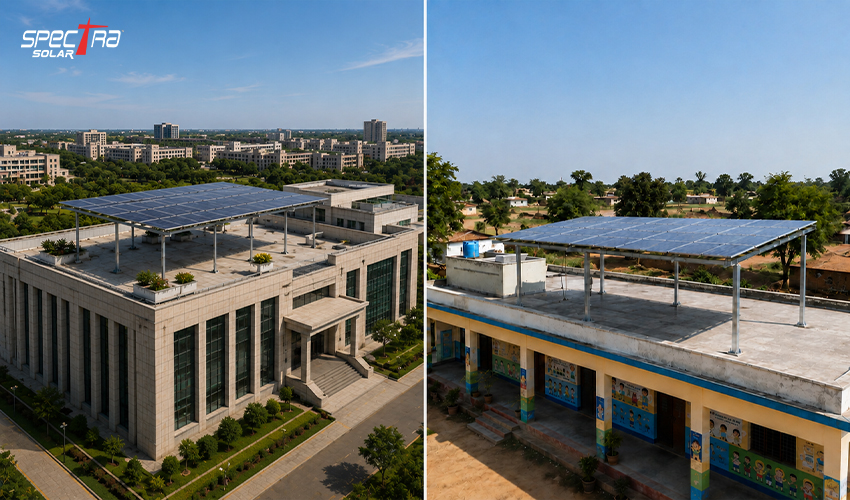
Switching to clean energy is easily the most reliable way for Indian households and businesses to neutralise punishing electricity tariffs. That said, simply installing a rooftop solar panel for homes is only half the battle. To genuinely capitalise on your green investment, your infrastructure has to interact seamlessly with the public utility grid. This entire operational loop hinges on a regulatory mechanism known as net metering.
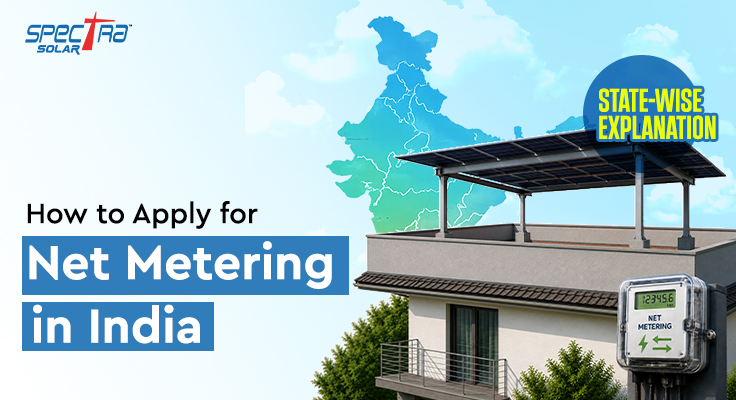
A net meter just replaces your standard electricity meter, so power can flow both ways. It tracks the electricity you pull from the solar energy system grid at night or on cloudy days, while also measuring the extra power your solar panels send back into the grid when the sun is out. At the end of the month, your bill is calculated solely on the net difference between the two numbers.

Converting your premises into a self-sufficient energy hub requires clear familiarity with regional utility mandates. Every territory operates under its own administrative guidelines, meaning the core regulations, structural frameworks, and exact documentation pathways vary considerably across individual Indian states.
Deconstructing Solar Net Metering Eligibility and Documents
Before rushing to submit a net metering online application, checking your baseline eligibility against the strict parameters set by your regional Distribution Company (DISCOM) will save you weeks of delays. These benchmarks prevent local transformers from catching fire due to sudden phase imbalances or severe load spikes.
Critical Eligibility Benchmarks
- Active Consumer Connection: You must hold a valid, active three-phase or single-phase domestic, commercial, or industrial power connection with an immaculate billing history free of active legal disputes.
- On-Grid Configuration: Net metering operates exclusively when you deploy an on-grid solar system. If you are simply checking an off-grid solar system price because you want an isolated battery setup, remember that completely off-grid frameworks never interface with the grid network. Consequently, they remain entirely locked out of utility energy credits or national financial incentives.
- Sanctioned Load Thresholds: The structural rating of your grid-tied inverter is legally capped at 100% of your premises' total sanctioned load. For instance, if your property's official power agreement is capped at 5 kW solar system, your actual solar array capacity must sit precisely at or below that benchmark.
- Approved Components: Sourcing hardware correctly dictates your financing. To secure the central financial assistance provided via the updated subsidy under the PM Surya Ghar Muft Bijli Yojana, your chosen installer must purchase solar panels explicitly catalogued on the Ministry of New and Renewable Energy's (MNRE) Approved List of Models and Manufacturers (ALMM).
Mandatory Documents for Clear Approvals
To ensure your solar net metering application form navigates the regional utility desk without getting flagged or rejected, aggregate these digital copies before filing:
- Your most recent electricity bill (make sure it's from the last two months).
- Standard government ID, like a PAN card, Voter ID, or Aadhaar.
- Proof of property ownership. A registered title deed or recent municipal tax receipt works fine, or a formal NOC if the place is rented.
- A single-line diagram (SLD) showing the whole electrical layout. This needs to be signed off by your solar vendor or a certified consultant.
- The original manufacturer datasheets and official BIS safety certificates for both the solar panels and the inverter.
Step-by-Step Breakdown: How to Apply for Solar Net Metering State-Wise
The Government Grid-Connected Rooftop Solar Programme acts as a single national window for registration, but local state boards handle everything else. Your actual site inspection, the physical engineering work, and the billing rules depend entirely on the guidelines set by your specific state electricity board.
Here is exactly how the state-wise solar net metering policy in India plays out across major economic zones right now.
1. Gujarat (GUVNL – UGVCL, MGVCL, PGVCL, DGVCL)
Gujarat continues to dominate the residential solar market across India. This success is down to an incredibly well-integrated digital framework connecting the state’s specialised SURYA Gujarat portal directly to central national databases.
- The Workflow: Applications go through a unified online ecosystem. Once your empanelled contractor uploads the structural layouts, the regional DISCOM engineers complete their technical feasibility assessment within 15 days.
- Settlement Mechanics: Gujarat uses a very fair 1:1 net energy accounting system built around an annual settlement cycle that resets every March. Surplus units generated during the bright summer months roll forward continuously. When the financial year ends, your local DISCOM buys any leftover power credits at the state's set Average Power Purchase Cost (APPC), which usually runs from ₹3.40 to ₹3.80 per unit.
2. Maharashtra (MSEDCL / Mahadiscom)
Maharashtra has updated its clean energy goals, deploying the SMART (Swayampurna Maharashtra Residential Rooftop) alignment alongside the national subsidy under the PM Surya Ghar parameters.
- The Workflow: Property owners must register on the Mahadiscom web portal to start their formal application for net metering. The structural feasibility check here is demanding, particularly in dense urban parts of Mumbai and Pune, where local distribution transformers run close to maximum capacity.
- Settlement Mechanics: MERC (Maharashtra Electricity Regulatory Commission) uses a monthly credit rollover model but clears the financial slate annually. The APPC credit rate remains stable at roughly ₹3.60 to ₹4.10 per unit, delivering a predictable return on investment for standard suburban homes.

3. Delhi (BSES Rajdhani, BSES Yamuna, Tata Power DDL)
The capital offers an aggressive financial return for metropolitan homeowners. Thanks to a dedicated generation-based incentive (GBI) offering ₹2 per unit exported for a fixed 5-year window, the real solar system for a home price is clawed back much faster than in neighbouring territories.
- The Utility Approval Timeline: Managing the entire transition online via the BSES or Tata Power web portals removes physical paperwork from the loop entirely. The turnaround time is highly prompt, generally taking between 30 and 45 days from the afternoon you submit your digital files to the day a field crew hooks up the new bidirectional meter on site.
- The Financial Settlement Mechanics: Energy adjustments clear out on a 12-month rolling cycle. Because local grid tariffs across Delhi regularly scale up to ₹8 or ₹12 per unit, leveraging a straight 1:1 net billing mechanism to completely wipe out your high-tier consumption provides immediate, significant financial relief.
4. Uttar Pradesh (UPPCL – PVVNL, DVVNL, MVVNL, PuVVNL)
Residential solar installations are booming across major Uttar Pradesh hubs like Noida, Ghaziabad, and Lucknow. This surge is mainly driven by the state's extra financial incentives that stack directly on top of the central government grants.
- The Workflow: UPNEDA works in tandem with UPPCL to process registrations through an online single-window desk. While rural distribution circles occasionally face administrative bottlenecks, urban zones process filings efficiently.
- Settlement Mechanics: Energy accounting uses a monthly settlement matrix, and any year-end net surplus is credited back to the consumer at an APPC tariff of around ₹3.00 to ₹3.60 per unit.
5. Karnataka (BESCOM, MESCOM, HESCOM)
Karnataka’s regulatory body, KERC, offers a mature framework, allowing net metering up to 100% of a property's total sanctioned load for domestic premises without unnecessary technical caps.
- The Workflow: BESCOM maintains one of the fastest net meter provisioning cycles in Southern India. The process is handled entirely online, which removes the need to deal with local subdivision offices in person.
- Settlement Mechanics: Operating on an annual accounting loop, the state provides an excellent APPC rate of ₹3.80 to ₹4.40 per unit for any excess generation left on the table at the close of the financial cycle.
The General Core Sequence: Submitting a Net Metering Online Application
No matter your geographic coordinates, the high-level administrative journey follows a standardised, five-stage technical roadmap:
- Portal Registration: Set up your digital profile on the National Portal for Rooftop Solar (pmsuryaghar.gov.in) or your state's direct DISCOM portal using your unique consumer connection number.
- Technical Feasibility Approval: Utility field engineers evaluate your local distribution transformer's remaining load cushion. Once they verify that the local grid lines can safely absorb your solar plant’s peak output without destabilising the neighbourhood, they grant formal engineering clearance.
- Procurement and Asset Assembly: Your chosen engineering partner installs the physical solar energy systems in strict alignment with electrical codes, utilising ALMM-certified PV panels.
- Safety Check: An inspector from the DISCOM or an independent electrical inspector will visit the site to test the anti-islanding feature. This is just a safety mechanism that stops your solar panels from sending power back into the grid lines during a power cut, which keeps repair workers safe from shocks.
- Signing and Metering: You will sign a formal net metering agreement with the DISCOM. Finally, utility crews replace your traditional meter with a bidirectional one, clear the technical paperwork, and officially greenlight your system to begin exporting power.
Beyond Residential: Commercial Solar Rooftop Systems
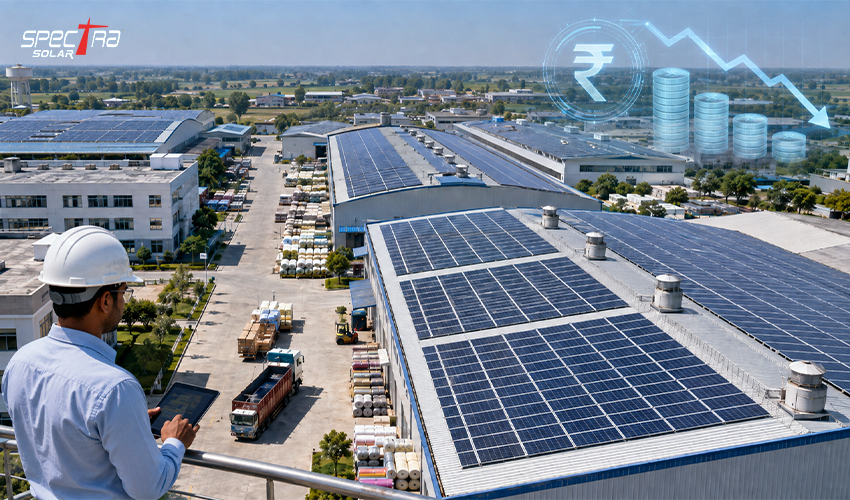
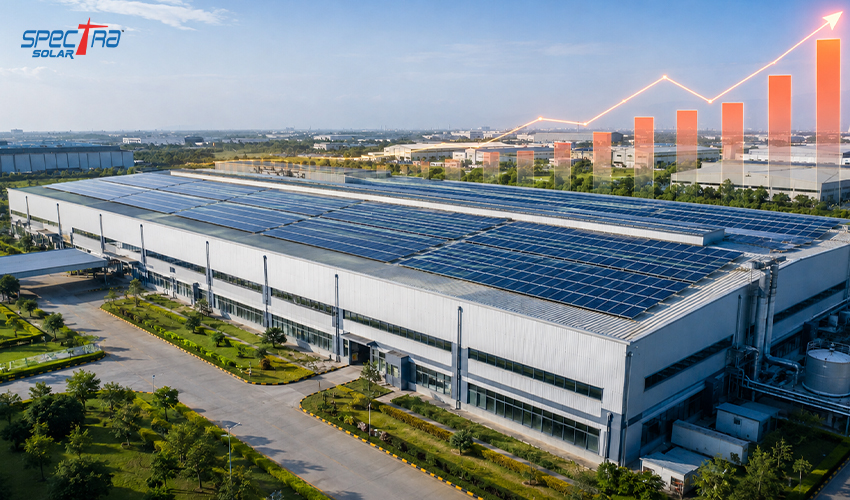
While homeowners use solar to eliminate their monthly domestic bills, corporate entities are executing these transitions at an enterprise scale. Activating commercial solar rooftop systems allows manufacturing hubs and commercial buildings to lock in their operational power costs for the next two and a half decades.
Because commercial utility tariffs are much higher, several states are migrating business enterprises away from traditional net metering over to modern Net Billing or Gross Metering regulatory models. In a net billing setup, the solar energy your machinery consumes directly in real-time saves you 100% of its cost, but any excess units spilt into the grid are credited at the significantly lower wholesale APPC rate rather than the retail consumer rate.
To maximise financial returns under these modern rules, design specialists recommend scaling commercial arrays to cover around 80% to 90% of your consistent daytime operational load, which prevents you from dumping massive amounts of cheap power back to the utility.
Partnering with Spectra Solar Power for a Hassle-Free Transition
Wading through the administrative red tape of a solar net metering application form, managing structural safety inspections, and tracking down central financial subsidies can easily turn into a full-time chore. Having seasoned engineering specialists handle the logistics changes the entire experience.
At Spectra Solar Power, we deliver end-to-end engineering, procurement, and construction (EPC) solutions built to align perfectly with your state's evolving net metering guidelines. Our dedicated compliance teams handle the entire process from start to finish—from initial 3D rooftop load profiling to processing application documents on official DISCOM portals and managing the final meter synchronisation.
We make sure every facet of your on-grid solar system satisfies local grid requirements, leaving you free to enjoy lower overheads and reliable, clean power without the administrative headaches. Get in touch with Spectra Solar Power today to assess your property's solar capacity and set up an engineering consultation.
Divanshi Gupta


Share This Article


Ready to switch to solar?
Get a free site assessment and no-obligation proposal within 48 hours. Our team covers 100+ cities across India.
-
 Plot No. 2, Landmark Tower, 2nd Floor, South City-1, Ashok Marg, Gurugram, 122001, Haryana
 -

-

RELATED BLOGS