What Is RESCO Solar? How UP Businesses Get Solar Without Paying a Rupee Upfront

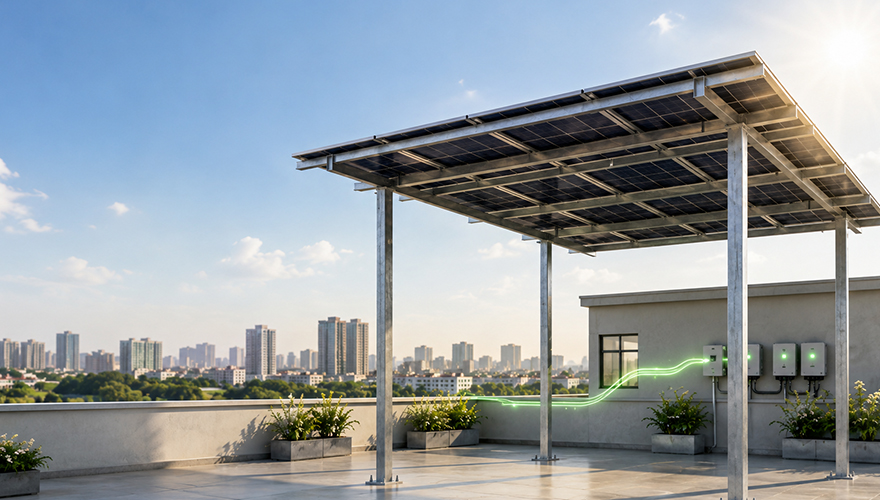
With the ever-growing market, every business eventually has to cross the same boat. Wondering if the next investment should ship towards expanding the network, hiring skilled employees, buying new equipment, or simply keeping rising operational costs under control?
An expense that is often overlooked is electricity.
For businesses, big power bills can slowly eat into budgets that could otherwise be used for growth. A slow expansion is better than incurring long-term operating costs. Fortunately, Solar has evolved beyond the traditional ownership model. Now, companies can get clean energy without making a heavy upfront investment. That's where the RESCO model in solar comes in.
This guide answers what is RESCO model in solar and explains how the RESCO solar model in Uttar Pradesh works, and explores why more UP businesses are choosing it to reduce electricity costs while keeping their capital focused on growth.

What is the RESCO Model in Solar?
The biggest misconception about solar is that every business needs to spend lakhs or even crores before seeing any savings; that isn't always true.
The RESCO model stands for Renewable Energy Service Company. It is specifically used by businesses that want the benefits of solar without having to purchase a solar system. Under this, a RESCO developer installs, owns, operates and maintains the solar plant, while the business simply pays for the electricity it consumes through a Power Purchase Agreement (PPA).
Instead of investing heavily in infrastructure, businesses continue investing in what matters most: expansion, operations and people. This is one reason the RESCO solar model in India has gained attention among commercial and industrial consumers looking to reduce electricity costs without affecting working capital.
How Does the RESCO Model Work?
The process is much simpler than many business owners expect. First, the building's electricity consumption and rooftop space are evaluated. Once the project is found feasible, the RESCO developer designs and installs the solar power system at its own expense.
After installation, the developer continues to own the system. They monitor its performance, carry out maintenance and handle repairs whenever required. The customer only pays for the electricity generated by the plant at the tariff agreed upon in the PPA.
For businesses, that translates into four simple advantages.
-
No upfront investment.
-
Lower electricity costs from day one.
-
No maintenance responsibility.
-
Better control over long-term operating expenses.
Unlike the traditional ownership model, the financial risk of installing and operating the solar system largely stays with the developer. Allowing businesses to focus on growth instead of worrying about operating and maintaining energy infrastructure.
Why Are UP Businesses Looking at the RESCO Solar Model?
Unlike a regular house, where electricity is a simple monthly expense. In commercial industries it directly affects operating costs, putting a load in funds. Every increase in tariffs can reduce available capital for hiring, expansion or equipment upgrades. That is why RESCO solar for commercial buildings in UP has become an attractive option.
Instead of blocking business capital in energy infrastructure, companies can continue investing in growth while benefiting from renewable energy. In fact, it also supports rooftop solar deployment across government, institutional and industrial buildings through the RESCO framework.
For many growing businesses, the question is no longer whether solar makes sense. It's whether buying the system makes sense. Where Does the RESCO Model Make the Most Sense? The RESCO solar model in India isn't limited to one industry. It is particularly useful for organisations that consume significant electricity during the day and have suitable rooftop space. These include:
-
Manufacturing units using industrial solar panels
-
Office buildings
-
Hospitals
-
Schools
-
Hotels
-
Warehouses
-
Shopping centres
-
Large facilities requiring a solar panel system for commercial buildings
Businesses exploring commercial solar panels often compare both the CAPEX and RESCO approaches before deciding which one aligns better with their financial goals. Evaluating different commercial solar panel options can help you understand how each model fits differently.
While the RESCO model is primarily designed for commercial and industrial users, homeowners exploring a solar system for home generally opt for direct ownership because residential energy consumption and financing requirements are very different. Understanding how the model works is one thing. Knowing where it delivers the most value is another.

Why Businesses Prefer RESCO Over Waiting
Many companies postpone solar for years. Not because they don't believe in it. Because they couldn’t divert funds which are helping them grow the business. Compared with opening another production line, hiring new employees or investing in equipment, funding a solar plant to save electricity doesn’t sound worthwhile. The RESCO model in solar removes that trade-off.
Instead of asking businesses to choose between expansion and lower electricity bills, it allows both to happen together. That's one reason many solar panel companies in India now offer RESCO alongside conventional ownership models as businesses increasingly look for flexible financing options.
Like any long-term business decision, choosing the right financing model is only half the process. Choosing the right implementation partner matters just as much.
Things to Consider Before Choosing a RESCO Partner
The RESCO model in solar may remove the upfront investment, but choosing the right implementation partner still matters. Before signing a Power Purchase Agreement, look at the tariff being offered, the contract duration, expected energy generation, maintenance responsibilities, and the developer's experience with commercial and industrial solar panels.
A reliable partner should also explain how monitoring, servicing, and performance guarantees are handled throughout the project's life.
Why the RESCO Model Is Growing Across India?
As we stated at the start, the shape of the growing market and the need to save money from unnecessary expenses have put the RESCO at the forefront. By saving the cost of installation, operations, and maintenance of every asset, many companies now prefer paying only for the electricity they use.
That shift in mindset and the need for businesses to save unnecessary expenses have been one of the reasons the RESCO model solar companies in India continue to see growing demand. The business wants to cut down on operational costs without affecting expansion plans. Government initiatives promoting rooftop solar have also encouraged wider adoption of such financing models.
This doesn't mean every business should choose RESCO. Some organisations with available capital may still prefer purchasing their own system. Others may even benefit from commercial solar parks or group captive projects depending on their energy requirements and available space.
The right solution depends on one question. How do you want to invest your capital? If your answer is growing your business instead of owning energy infrastructure, the RESCO solar model in India becomes a compelling option.
For businesses exploring different implementation models, companies like Spectra Solar Power also offer RESCO alongside conventional EPC solutions, allowing organisations to choose the approach that best matches their financial and operational goals.
Lower Bills. More Room to Grow.
Every business wants to reduce costs. The challenge is doing it without slowing down growth. That's exactly why the RESCO model in solar has become an attractive option for many UP businesses. Instead of making a large upfront investment, businesses can adopt clean energy while keeping their capital available for expansion, hiring, and future opportunities.
As the market for renewable energy in India matures, solar panel companies in India are shifting away from one-size-fits-all sales pitches. Today, they are offering diverse, flexible financing frameworks that empower businesses to align energy procurement with their specific operational needs and financial risk appetite. Whether you are performing a comparative analysis of commercial solar panels and industrial solar panels or investigating the nuances of the RESCO solar model in Uttar Pradesh, the path forward requires a rigorous look at your own capital priorities.
The shift to solar isn’t about checking boxes for a sustainability report; it’s about taking the reins on your biggest operational overhead. As Uttar Pradesh grows into a manufacturing powerhouse, the companies that come out on top won't be the ones that just survived the grid’s instability, they'll be the ones that built their own path around it.
Frequently Asked Questions
1. What is the RESCO model in solar?
The RESCO model, or Renewable Energy Service Company, is a model specifically used by businesses that want the benefits of solar without having to purchase a solar system.
2. Why is the RESCO solar model popular among UP businesses?
Many UP businesses are switching to RESCO, as it helps eliminate the need for a large upfront investment and helps reduce long-term electricity costs. Helping businesses to preserve capital for expansion and day-to-day operations.
3. Is the RESCO model suitable for commercial and industrial buildings?
Yes. The model is widely used by offices, factories and other facilities that may require commercial solar panels or industrial solar panels and have consistent daytime consumption of electricity.
4. Can the RESCO model be used for a solar system for home?
Although the model is mainly designed for commercial consumers, some residential societies and housing projects may also adopt it depending on local policies and developer offerings. Individual homeowners often compare it with direct ownership before choosing a solar system for home.
5. How do I choose between the RESCO model and buying a solar system?
Choosing between the two mostly depends on the budget and long-term goals. Use RESCO if you aim to save electricity consumption and if it matches your long-term business goals. Comparing both options with an experienced solar partner like Spectra Solar Power can help with the decision too.

Share This Article


Ready to switch to solar?
Get a free site assessment and no-obligation proposal within 48 hours. Our team covers 100+ cities across India.
-
 Plot No. 2, Landmark Tower, 2nd Floor, South City-1, Ashok Marg, Gurugram, 122001, Haryana
 -

-


