Solar Subsidy for MSMEs in India: Benefits, Eligibility & Application Process

Running a business in India feels like you’re constantly fighting against rising costs, and honestly, those massive electricity bills are like a heavy anchor dragging everyone down. Tariffs just keep going up and up, which is exactly why everyone is suddenly talking about a solar subsidy for MSMEs in India. It’s not just some fancy "go green" trend either; for most of us, it’s actually a strategic survival move just to stay in business.
You really cannot ignore the role of solar energy in MSME growth because it basically takes that annoying monthly liability and turns it into an asset you actually control. When you start digging into the renewable energy subsidy for MSMEs, you can see the government is finally trying to help us cover those scary upfront costs so we can actually get to the long-term profit part.
The Financial Logic of Solar for Small Businesses
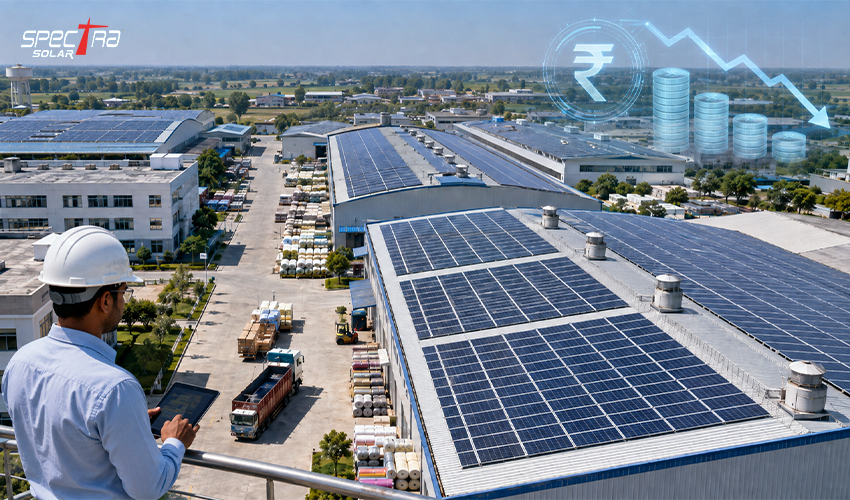
A lot of people wonder if the investment is actually worth the effort. In 2026, the data suggests it is more viable than ever. Typical commercial electricity rates in many Indian states hover between ₹8 and ₹12 per unit. By utilising commercial solar rooftop systems, an enterprise can slash these costs by nearly 70%. This is why the benefits of solar subsidies for MSMEs are so attractive; they lower the barrier to entry.
Beyond just the immediate savings, there is the advantage of accelerated depreciation. Businesses can claim a substantial portion of the system cost as depreciation in the first year, which provides a massive relief on taxable income. It is a dual benefit: you pay less for power, and you save on taxes.
The Ministry of New and Renewable Energy has been pivotal in this transition. The MNRE solar subsidy for MSMEs often operates through various state-specific and central schemes. While the popular PM Surya Ghar scheme is largely residential, the MNRE solar subsidy scheme for the industrial sector often takes the form of interest concessions or capital grants under specific state policies.
For instance, the role of MNRE in solar energy has evolved to include the MSME-GIFT (Green Investment and Financing for Transformation) scheme, which helps smaller units access credit at much lower interest rates. This is vital because liquidity is often the biggest hurdle for a small workshop or a boutique manufacturing unit.
Government Schemes for MSME Solar

When searching for a government solar subsidy for MSMEs, it’s important to look at both central and state-level offerings. Many states, like Gujarat, Rajasthan, and Maharashtra, have dedicated packages that complement the central efforts. The government schemes for MSME solar often involve a combination of capital subsidies and net metering benefits.
Net metering is a game-changer; it allows you to feed excess power back into the grid during holidays or low production days, earning you credits on your bill. This ensures that every ray of sun falling on your roof is accounted for, much like a solar system health check in india – checklist, safety & benefits, ensuring your equipment stays in peak condition.
Not every business can just sign up and get a cheque. The solar subsidy eligibility for MSMEs is tied strictly to the Udyam Registration. If you are not registered as an MSME on the official portal, you are essentially invisible to these benefits. Usually, the question of who can apply for the solar subsidy msme comes down to having a valid electricity connection in the name of the enterprise and owning or having a long-term lease on the premises.
Most solar subsidies for small businesses require the use of Made in India (DCR) modules to qualify for the financial assistance. This is a crucial point that many people miss, only to find out later that their imported panels aren't eligible for the rebate.
How to Apply for Solar Subsidy for MSMEs?
The process has become significantly more digital, but it still requires a bit of patience. If you are wondering how to apply for a solar subsidy for MSMEs, here is the general flow. First, you need a feasibility report from your local DISCOM to ensure the grid can handle your solar export. Once that is in hand, you register on the national or state portal.
The rooftop solar subsidy for msmes is typically disbursed only after the system is commissioned and a joint inspection is conducted by the electricity board and the empanelled vendor. It is a bit of a bureaucratic dance, but the savings at the end make it worthwhile. You will need your latest electricity bills, Udyam certificate, and land documents ready for upload.
With so many players in the market, finding the best solar panel company in India can feel overwhelming. You need someone who doesn't just sell you hardware but understands the technicalities of a solar panel for industry in India. This is where the choice of an EPC (Engineering, Procurement, and Construction) partner matters.
A top solar company in India will handle the liaison with the DISCOM, ensuring your subsidy application doesn't get stuck in a pile of paperwork. They should be able to explain the benefits of MNRE solar subsidies in the context of your specific roof size and energy load, just as they might explain the latest solar panel technology – why branded panels offer better roi for smaller capacity setups.
Technical Considerations for Industrial Solar Panel Installations

When installing industrial solar panels, the focus shifts from simple energy generation to high efficiency and durability. These systems are exposed to harsher environments, sometimes involving chemical fumes or heavy dust. Therefore, selecting high-quality modules is non-negotiable.
While looking for a solar system for home price, one might prioritise cost, but for a business, the focus should be on the Levelized Cost of Energy (LCOE). You want the most power generated per square metre over 25 years. This is why many MSMEs are now opting for bifacial panels or TOPCon technology to maximise the output from limited roof space.
Spectra Solar Power understands the MSME reality: every saved rupee goes straight back into your business. We’ve handled 1,000+ installs, ranging from home rooftops to heavy-duty industrial sites. Our difference? We don't just sell panels; we lead with a consultation-first approach to find what actually works for your scale. Instead of pushing a standard package, we look at your load patterns and recommend a system that actually fits.
Whether you are looking for an on-grid system to lower your bills or a hybrid setup for critical backup, our team of experts with over 15 years of experience ensures the job is done right. We are one of the few who provide a comprehensive AMC, so you aren't left stranded after the installation.
Final Thoughts on MSME Solar Adoption
Switching over to solar isn't even about being "eco-friendly" anymore; it is just a cold, hard business move at this point. Since the solar subsidy for MSMEs in India is basically at its peak right now in 2026, if you wait any longer, you are probably just going to miss out on the best cash incentives the government is offering. The grid is just getting pricier by the day while the sun stays free, so by grabbing a solar subsidy for small businesses, you are basically locking in your power costs for the next twenty years.
Divanshi Gupta


Share This Article


Ready to switch to solar?
Get a free site assessment and no-obligation proposal within 48 hours. Our team covers 100+ cities across India.
-
 Plot No. 2, Landmark Tower, 2nd Floor, South City-1, Ashok Marg, Gurugram, 122001, Haryana
 -

-

RELATED BLOGS