Solar Panel Price & Subsidy in Haryana (2026 Guide)

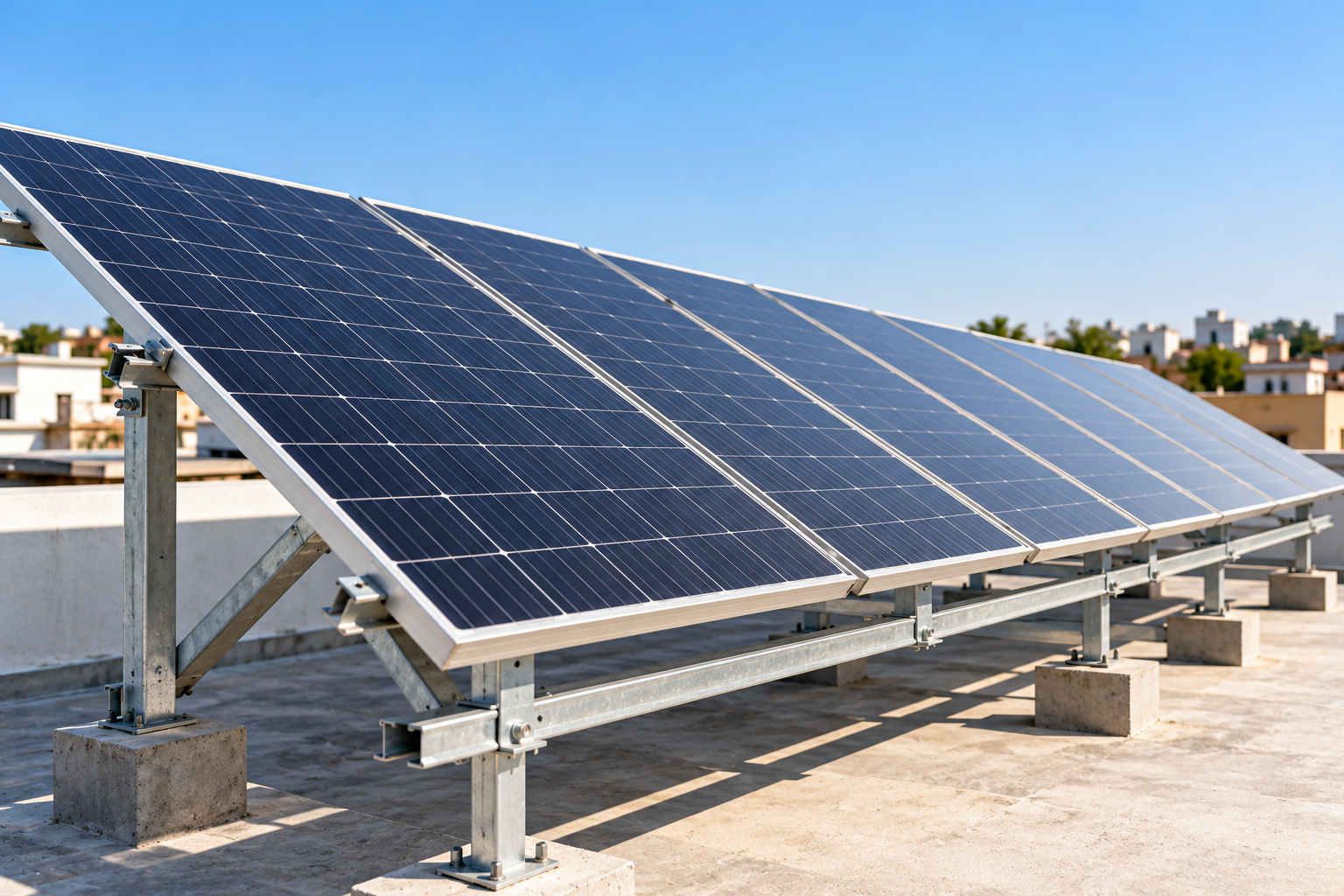
Solar subsidy in Haryana is the total subsidy received by the homeowner from the PM Surya Ghar Muft Bijli Yojana, and the Haryana government's own rooftop solar subsidy program. Together, they can cut the price of a home solar system by ₹78,000 to ₹1,10,000 in 2026.
Haryana receives high quality sunlight throughout the year and its tariff is high and increases significantly when it reaches the home market. That is one of the better financial decisions which a Haryana household can make to go for rooftop solar.
Most people who are searching for solar panel price in Haryana seek three answers. How much is the system worth and what is the subsidy value and how much must be paid in addition. This guide explains the pricing of 1kW - 5kW systems in 2026, rules for central and state subsidies, the net pricing after subsidy, and how to apply.
Key Takeaways: Under PM Surya Ghar Yojana Haryana, the central subsidy will be at a 50% rate and capped at ₹78,000 per kW with a maximum installation limit of 2 kW and 18 kW for the third kW. Antyodaya families can get a subsidy of up to ₹50,000 for the systems up to 2 kW while other eligible households in Haryana can avail of a subsidy of ₹19,500 per kW which is interest free.
A 3 kW system that costs ₹2,00,000 to ₹2,50,000 before subsidy comes down to roughly ₹1,22,000 to ₹1,72,000 after the central subsidy alone.
What is the Solar Panel Cost in Haryana 2026?
The cost of a residential on-grid solar system, without subsidies, in Haryana in 2026 is estimated to range from ₹65,000 to ₹85,000 per kW. The more the installation costs of the system (inverter, net meter, and installation) are spread across a larger number of panels, the smaller the cost per kW.
There are four factors which determine the final quote. The technology and the brand of the panel, brand of inverter, type of mounting required by your roof, and the gap between your roof and meter.
|
System size |
Price before subsidy (indicative) |
Suits a monthly usage of |
|
1 kW |
₹75,000 - ₹90,000 |
Up to 120 units |
|
2 kW |
₹1,40,000 - ₹1,70,000 |
120 - 250 units |
|
3 kW |
₹2,00,000 - ₹2,50,000 |
250 - 400 units |
|
5 kW |
₹3,20,000 - ₹3,90,000 |
400 - 650 units |
These figures assume DCR (domestically manufactured) panels, which are compulsory for the subsidy, and a standard on-grid inverter. A hybrid system with battery backup costs more. The 2kW solar panel price in Haryana and the 3kW solar panel price in Haryana are the two most common quotes we give, because they match the sanctioned load of most homes in Ambala, Panipat, Kurukshetra and the NCR districts.
How Much Solar Subsidy Does the Central Government Give in Haryana?
The central subsidy under PM Surya Ghar Muft Bijli Yojana is ₹30,000 per kW for the first 2 kW, ₹18,000 for the third kW, and nothing beyond 3 kW. The scheme is run by the Ministry of New and Renewable Energy and applies to every state, including Haryana.
So the solar panel subsidy in Haryana for home systems under the central scheme works out like this:
-
1 kW system: ₹30,000
-
2 kW system: ₹60,000
-
3 kW system: ₹78,000
-
5 kW system: ₹78,000 (the cap applies, there is no extra subsidy for the fourth and fifth kW)
The subsidy is paid directly into the homeowner’s bank account after the net meter is commissioned. It is a grant, not a loan. You apply through the national portal, and the application goes to your DISCOM, which is DHBVN in south Haryana and UHBVN in the north.
Two conditions matter. The connection must be a domestic one in the applicant’s name, and the panels and inverter must come from a DISCOM-empanelled vendor. Our guide on how long it takes to get the solar subsidy credited explains the payout step.
What Does the Haryana Government Solar Scheme Add on Top?
The Haryana government solar scheme adds state financial assistance on top of the central subsidy, and the amount depends on the family’s income and bill history. The state revised the rules in 2026 so that more families qualify.
Under the Haryana scheme, rooftop solar on 2.22 lakh households is the target by 31 March 2027, and the support is split into three categories.
-
Antyodaya families with annual income up to ₹1.80 lakh: a state grant of ₹25,000 per kW or 40% of the system cost, whichever is lower, on systems up to 2 kW. That is a maximum of ₹50,000 as an outright grant.
-
Antyodaya families with income between ₹1.80 lakh and ₹3 lakh: a state grant of ₹10,000 per kW plus interest-free assistance of ₹9,500 per kW, both on systems up to 2 kW. The grant portion is ₹20,000 and the interest-free portion is recovered through the electricity bill in 24 monthly installments.
-
Non-defaulting domestic consumers and Haryana state government employees: interest-free assistance of ₹19,500 per kW on systems up to 5 kW, capped at ₹97,500. This is recovered through the bill in 24 monthly or 12 bi-monthly instalments.
The income is checked against the Family ID (Parivar Pehchan Patra). In June 2026 the state government amended the scheme so that a consumer only needs a clean record in the last billing cycleinstead of three years of on-time payments. The applicant must also have no outstanding dues on any other connection in Haryana.
The distinction that matters is grant versus interest-free assistance. The ₹50,000 for an Antyodaya family is never repaid. The ₹19,500 per kW for a regular household lowers the upfront payment but comes back through the bill over two years.
What Is the 3kW and 5kW Solar System Price in Haryana With Subsidy?
A 3 kW system in Haryana costs about ₹1,22,000 to ₹1,72,000 after the central subsidy, and a 5 kW system costs about ₹2,42,000 to ₹3,12,000. The table below shows the net cost at each size for a regular household that gets the central subsidy only.
|
System size |
Price before subsidy |
Central subsidy |
Net cost after central subsidy |
|
1 kW |
₹75,000 - ₹90,000 |
₹30,000 |
₹45,000 - ₹60,000 |
|
2 kW |
₹1,40,000 - ₹1,70,000 |
₹60,000 |
₹80,000 - ₹1,10,000 |
|
3 kW |
₹2,00,000 - ₹2,50,000 |
₹78,000 |
₹1,22,000 - ₹1,72,000 |
|
5 kW |
₹3,20,000 - ₹3,90,000 |
₹78,000 |
₹2,42,000 - ₹3,12,000 |
Now add the Haryana state support. The 2kW solar panel price in Haryana with subsidy for an Antyodaya family under ₹1.80 lakh income drops by another ₹50,000, so the net cost becomes ₹30,000 to ₹60,000. That is a 2 kW system for about a third of its sticker price.
For the 5kW solar system price in Haryana with subsidy, a non-defaulting household can claim ₹97,500 as interest-free assistance on top of the ₹78,000 central grant. The upfront payment falls to roughly ₹1,45,000 to ₹2,15,000, with the ₹97,500 recovered through the bill over 24 months at no interest.
Most homes do not need the full subsidy calculation by hand. Use our solar subsidy and savings calculator to get the net figure for your sanctioned load and bill.
How Much Does a Haryana Home Save After Going Solar?

A 3 kW system in Haryana generates around 360 units a month, which is enough to cover the full bill of a typical three-bedroom home outside peak summer. The saving is larger in Haryana than in many states because of how the domestic tariff is structured.
The HERC tariff puts the top domestic slab at ₹7.10 per unit above 500 units. A household that runs two air conditioners in summer crosses that slab easily. Every unit the rooftop system produces replaces the most expensive unit on the bill first.
Here is what the arithmetic looks like for a 3 kW system:
- Monthly generation: around 360 units
- Value of those units at the 301 to 500 slab: ₹2,300 to ₹2,600 a month
- Annual saving: ₹28,000 to ₹31,000
- Net cost after central subsidy: ₹1,22,000 to ₹1,72,000
- Payback: four to six years, against a panel life of 25 years
Net metering is what makes this work. Units you do not use in the day are exported to the grid and credited against the units you draw at night. Haryana settles these credits monthly with an annual true-up. Our explainer on how solar net metering works covers the billing in detail.
A real example from our own installs: a Gurugram homeowner’s monthly bill fell from ₹14,500 to ₹1,250 after switching to rooftop solar. The full breakdown is in our Gurugram solar saving case study.
How Do You Apply for Solar Subsidy in Haryana?
You apply for the solar subsidy in Haryana 2026 through the PM Surya Ghar national portal, and the state assistance is processed through the same application. The whole process takes six to ten weeks from registration to net meter commissioning.
Register on pmsuryaghar.gov.in with your mobile number, DISCOM (DHBVN or UHBVN) and consumer number.
- Upload a recent electricity bill. The connection must show “Domestic” as the category.
- Wait for technical feasibility approval from the DISCOM. This checks that your sanctioned load supports the system size you want.
- Choose a DISCOM-empanelled vendor from the list on the portal and get the system installed.
- Apply for the net meter through the DISCOM portal once installation is complete.
- Submit the commissioning report and bank details on the national portal. The subsidy is credited within 30 to 45 days.
If your sanctioned load is lower than the system you want, apply for a load enhancement on the DHBVN or UHBVN portal first. This is the most common reason applications stall. The other frequent problems are a bill in a different family member’s name and a vendor who is not empanelled. We have listed all of them in our guide on why solar subsidy applications get rejected.
The central scheme runs until March 2027, and the Haryana target has the same deadline. Our post on the PM Surya Ghar Yojana deadline explains why applying early avoids the end-of-scheme rush.
Which Districts of Haryana can avail the subsidy?
All the districts of Haryana are covered. The central scheme is a national scheme and all DHBVN and UHBVN consumers are covered by the state scheme.
- DHBVN (South Haryana): Gurugram, Faridabad, Sonipat, Rewari, Hisar, Sirsa, Bhiwani and adjoining areas
- Haryana (north): Ambala, Panipat, Kurukshetra, Karnal, Yamunanagar, Rohtak and its adjoining areas
Therefore, the amount of solar subsidy in Ambala is equal to the solar subsidy in Panipat and the solar subsidy in Kurukshetra. The difference is the installer and how he or she deals with the DISCOM paperwork in your circle. See our state-wise solar subsidy breakdown for 2026 for what other states contribute to the central subsidy.
Why Opt for Solar PV Solutions by Spectra Solar in Haryana?
Spectra Solar Power's rooftop system is DCR compliant and is installed in Gurugram, Faridabad, Ambala, Panipat and Kurukshetra in Haryana. We are empanelled with the Haryana DISCOMs, so your subsidy application, feasibility approval and net meter is completed in the hands of one team.
All systems are setup around your bill and sanctioned load, not a package. This is the only way to receive the full central subsidy, the appropriate state subsidy for your category, and a system which pays for itself in 4 – 6 years of operation.
Let's see what your home can save? Discuss our residential solar roof-top solutions, and book a complimentary site evaluation. We will provide you with a fixed quote, the exact subsidy that you are eligible for and the net cost will be provided in writing before you commit.
FAQs
What is the total solar subsidy in Haryana for a 2 kW system?
A regular household gets ₹60,000 from the central PM Surya Ghar scheme. An Antyodaya family with income up to ₹1.80 lakh gets an additional state grant of up to ₹50,000, taking the total to ₹1,10,000. Families earning ₹1.80 lakh to ₹3 lakh get ₹20,000 as a state grant plus ₹19,000 as interest-free assistance.
Is there a Haryana state subsidy for a 5 kW system?
There is no state grant beyond 2 kW. Non-defaulting consumers and state government employees can claim interest-free assistance of ₹19,500 per kW on systems up to 5 kW, which is ₹97,500 in total. It is recovered through the electricity bill over 24 months, so it reduces the upfront cost but not the final cost.
How long does the subsidy take to arrive after installation in Haryana?
Once the net meter is commissioned and the commissioning report is submitted on the portal, the central subsidy is usually credited within 30 to 45 days. Delays almost always come from mismatched bank details or a missing commissioning report, not from the DISCOM.

Share This Article


Ready to switch to solar?
Get a free site assessment and no-obligation proposal within 48 hours. Our team covers 100+ cities across India.
-
 Plot No. 2, Landmark Tower, 2nd Floor, South City-1, Ashok Marg, Gurugram, 122001, Haryana
-

-


