Wind Vs. Solar — Which Renewable Energy is better?

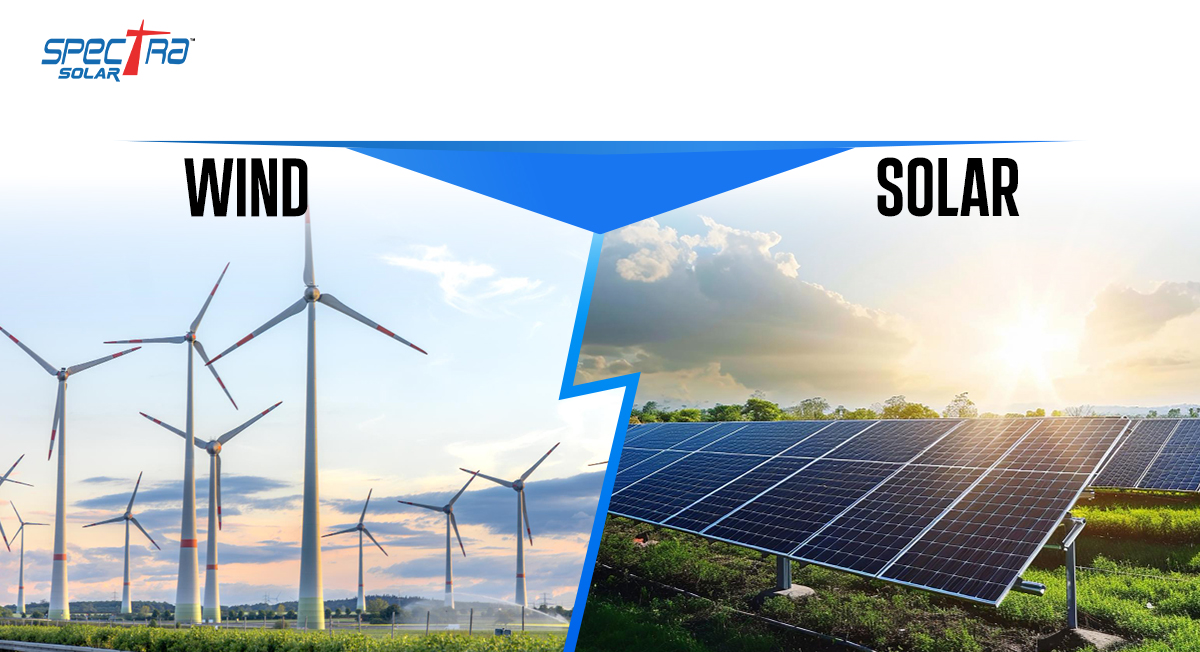
Deploying on-site clean power means matching your structural footprint to local atmospheric realities. The solar energy vs wind energy battle is not a matter of eco-philosophy; it is a calculation of structural engineering, real estate utility, and capital deployment strategies.
To find your best path to energy autonomy, you must weigh the mechanical mechanics of power generation directly against the unique physical layout of your facility and your long-term investment horizon.
The Core Mechanical Face-Off
Every facility has a unique physical footprint, and choosing the right power generation asset hinges entirely on how that space interacts with the atmosphere. The split between solar and wind comes down to two very different recovery mechanisms.
Solar Power Generation
-
The Process: Sunlight reacts directly with the silicon cells, knocking electrons free to kickstart a Direct Current (DC) flow through the photovoltaic effect.
-
Predictability: Generation curves map reliably against daylight hours, peaking right when utility grid demand and commercial daytime peak-tariffs spike.
-
Physical Impact: A completely static system with zero moving parts, removing the risk of mechanical friction, structural vibration, or noise wear on the roof.
Wind Power Generation
-
The Process: Kinetic wind currents push large aerodynamic blades, turning a mechanical alternator to produce grid-ready Alternating Current (AC) power.
-
Predictability: Yield is highly dynamic and depends on erratic, high-velocity air currents that frequently shift based on weather patterns.
-
Physical Impact: Constant physical rotation introduces heavy structural vibrations, bearing friction, and low-frequency noise that can stress the integrity of building mounts over time.

Solar Energy vs Wind Energy: Pros and Cons
Each generation choice comes with specific operational bottlenecks and hardware constraints that dictate whether the system actually saves you money over its lifetime.
The Dynamics of Solar Power
The Advantages:
-
Space Efficiency: Arrays bolt straight onto your existing roof footprint. Utilising industrial and commercial rooftops lets companies spin up an on-site power plant from dead space, skipping the capital expense of buying raw land.
-
Minimal Upkeep: No moving hardware means there is basically nothing to break down mechanically. Beyond standard panel washes to clear dirt and an occasional diagnostic check on the inverters, the system runs itself for well over twenty-five years.
-
Scalable Engineering: Solar technology is modular. The same fundamental technology scales from a compact 3 kW solar panel for residential use up to multi-megawatt setups of solar panels for industries.
The Limitations:
-
Daytime Dependent: Production stops at night and drops during heavy cloud cover. Facilities running continuous night shifts must rely on grid blending or industrial battery storage systems.
-
Temperature Sensitivity: High ambient temperatures can lower silicon cell efficiency slightly. This requires proper spacing and ventilation under the mounting structures during installation to manage heat buildup.
The Dynamics of Wind Power
The Advantages:
-
Continuous Production Windows: Wind assets bypass the limitations of daylight entirely. Generation triggers the moment local wind velocity crosses minimum operational cuts, which typically aligns with late-evening thermal shifts.
-
Massive Unit-Level Yield: A commercial turbine delivers significant concentrated capacity, reaching multi-megawatt thresholds from one structural footprint when localised wind metrics hit optimal design peaks.
The Limitations:
-
Relentless Mechanical Attrition: Turbines are massive, high-stress machines prone to severe physical friction. Spinning blades strain internal gearboxes and main bearings constantly, binding operators to strict, expensive servicing schedules and recurring lubrication runs simply to keep the system from seizing up.
-
Bad Airflow in Towns: Wind machines fail if the breeze stops or changes direction too much. Putting a mill close to large warehouses, manufacturing spaces, or high-rise blocks ruins your yield because those brick walls split the wind path into messy gusts, stopping your machinery from catching a steady stream of power.
-
Punishing Local Bureaucracy: Big rotating blades trigger local complaints because they make an annoying low hum and throw rhythmic flashes of shadow over adjacent windows. You will have to fight tough city height restrictions, property boundary rules, and long safety inspections before you can ever put a spade in the ground.
Evaluating the Financial Architecture
When assessing a solar vs wind energy comparison, the choice usually comes down to initial capital efficiency and the structural requirements of the project. The wind power vs solar power cost equation changes significantly based on whether the system is installed for a single facility or a utility-scale power plant.
|
Financial & Operational Metric |
Industrial & Commercial Solar |
Commercial Wind Power |
|
Initial Capital Investment (CapEx) |
Low to Moderate; easily scalable |
Very High; requires major structural engineering |
|
Space Real Estate Requirement |
Utilises existing roof space |
Requires expansive, dedicated land plots |
|
Payback Period (ROI Window) |
Typically 3 to 5 years |
7 to 10+ years, depending on wind yield |
|
Maintenance & Upkeep Intensity |
Minimal; basic cleaning & diagnostics |
High, regular mechanical and gear service |
|
Regulatory & Permit Complexity |
Streamlined net-metering policies |
Protracted environmental and safety clearance |
For a single factory or warehouse, wind installations are a logistical nightmare. You are looking at deep soil drilling, massive reinforced concrete bases, specialised crane hire, and heavy-duty cabling just to get started. Partnering with a solar EPC company in India cuts through that complexity, delivering an operational power asset in a fraction of the time with far less structural baggage.

Why Indian Industrial Hubs Choose Solar Over Wind?
Massive wind farms make perfect sense along the Gujarat coast or across the Rajasthan desert, but they fail the practicality test for an average suburban manufacturing unit or business park.
Beating the Space Problem
Crammed manufacturing clusters across areas like Gurugram, Lucknow, Pune, or Kanpur present a massive physical roadblock for wind projects. The sheer density of nearby factory walls and warehouses chokes off natural airflow, creating chaotic, choppy currents that leave smaller turbines practically useless.
Transitioning your focus to commercial solar rooftops allows businesses to extract massive value from the exact footprint they already occupy. This strategy completely reclaims dead roof space, letting you slash heavy grid bills without forcing your company to secure a single extra acre of expensive land.
Policy and Financial Integration
National clean energy updates and policy frameworks can be verified directly via the Ministry of New and Renewable Energy (MNRE), which helps structure localised solar power. The MNRE maintains net-metering policies across most states. This allows commercial facilities to send excess daytime generation back to the local utility grid, earning energy credits that offset their nighttime consumption costs.
Additionally, commercial and industrial solar companies offer flexible payment models. Under the CAPEX model, businesses own the asset outright for maximum long-term returns. Under the OPEX or RESCO model, a third party finances the installation, and the business simply purchases the generated power at a lower tariff than the utility grid, removing the hurdle of upfront capital.

Securing Your Energy Future with Spectra Solar
Selecting a clean energy setup depends entirely on your site's physical footprint and capital constraints. Wind turbines do heavy lifting for utility grids, but on-site solar gives commercial and industrial facilities a much more predictable, scalable, and secure return on investment.
As an active turnkey solar EPC contractor, Spectra Solar takes over the entire engineering, sourcing, and build phases of your energy infrastructure. For a deeper look into selecting a deployment partner, read through our walkthrough on choosing a solar EPC company in India. Our engineering teams take you through the complete lifecycle from initial shadow mapping and structural load calculations up to regulatory liaison, DISCOM clearance, and net-metering synchronisation.
Whether you need to install heavy-duty solar panels for industries to lower manufacturing costs, mount commercial solar rooftop systems across corporate warehouses, or deploy a high-efficiency solar panel for residential properties, our execution pathways are detailed extensively in the Spectra Solar Power C&I Industrial Framework.
For regional projects running under specific state mandates, you can also explore our localised Spectra Solar Regional EPC Analysis for Rajasthan to see how regional utility tariff data impacts your long-term returns. By utilising quality components and structured engineering practices, we ensure your system delivers consistent power output and measurable financial savings year after year.

Share This Article


Ready to switch to solar?
Get a free site assessment and no-obligation proposal within 48 hours. Our team covers 100+ cities across India.
-
 Plot No. 2, Landmark Tower, 2nd Floor, South City-1, Ashok Marg, Gurugram, 122001, Haryana
 -

-

RELATED BLOGS