How Residential Solar Installation Works? Step-by-Step Guide

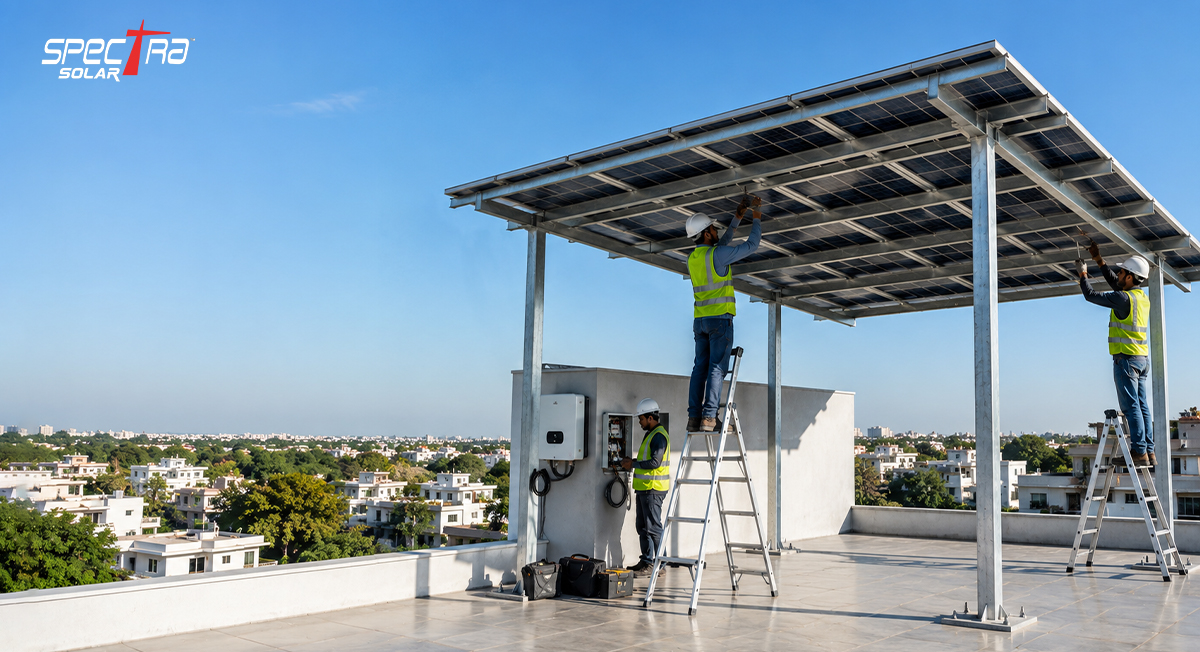
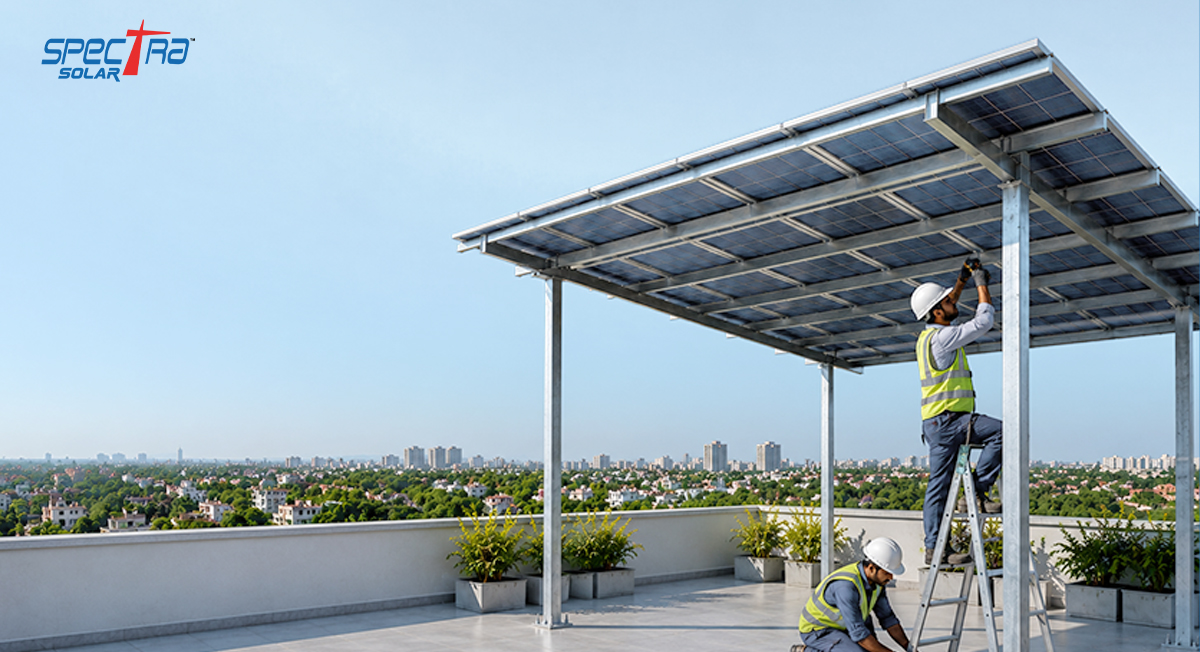
Most homeowners assume that installing solar panels involves little more than bolting frames to a roof and connecting a few wires. In reality, a high-performance system is a technical construction project. It requires precise structural maths, strict adherence to local grid regulations, and a layout tailored to the specific shadow geometry of the building. Successful, 25-year solar installations rely on a rigorous engineering protocol rather than a basic sales pitch.
If you are considering a residential solar installation, it helps to understand the "engineer's perspective" on how these systems are built. This guide goes beyond the basics to explain the technical rigour required to ensure your system remains a productive, 25-year asset.
1. The Engineering Audit: Ensuring Roof Integrity
When our team conducts a site assessment, we aren't just measuring the available square footage. We are performing a structural audit. Your roof must act as a reliable foundation for your energy plant, and we take that responsibility seriously.
-
Static & Dead Load Calculations: Every roof has a weight limit. We calculate the "dead load" of the mounting structures plus the "live load" (wind pressure and maintenance traffic). If your roof is an older RCC structure or a metal sheet, we often integrate sub-structures to ensure the weight is distributed safely across load-bearing beams rather than weak spots.
-
Precision Shadow Profiling: We use solar pathfinders to map the sun’s exact movement over your property. Even a minor shadow from a water tank, a parapet wall, or a neighbour’s chimney during the 10 AM–4 PM window can force an inverter to "clip" the output of an entire string of panels. Our design focuses on avoiding these "hot spots" entirely to maintain peak generation throughout the year.

2. Optimising the Balance of System (BOS) for Durability
Everyone talks about the panels because they are the shiny objects on your roof. But honestly? The panels are the easy part. The real difference between a system that hums along for 25 years and one that starts failing in five is the Balance of System (BOS). This is the boring stuff, the cables, the clamps, and the safety gear that nobody notices until it stops working.
-
Why we obsess over cables: I’ve lost count of how many systems I’ve seen fail because of cheap wiring. If you use standard household electrical wire on a rooftop, the harsh Indian sun will chew through that insulation in a couple of years. You get cracks, then water gets in, and suddenly you have a ground fault. We only use UV-rated, fire-retardant DC cables. They cost more, but they don't turn brittle when the temperature hits 45 degrees Celsius.
-
The "Lightning" Reality: If you live in a high-rise or an area with a lot of open space, you’re basically a target for electrical surges. A lightning strike doesn't have to hit your house directly to toast your inverter; a strike nearby can send a surge right through your grid. We don't consider lightning arrestors an "extra." We treat them as non-negotiable. If we don’t have a clear path to dump that surge into the earth, your inverter is going to be the first thing that gets fried when the monsoon storms roll in.
-
The Mounting Logic: We stick with hot-dip galvanised steel for our frames. We’ve seen too many "budget" installs use painted iron that starts rusting the second it touches humidity. In our climate, rust isn't just an eyesore; it’s a structural failure waiting to happen. If the frame gives way, the panels go with it. We don't take that risk.

3. Navigating Grid Connection: Achieving Technical Feasibility
Securing DISCOM approval for the Technical Feasibility Report (TFR) remains the most significant procedural bottleneck for most solar projects, especially where local grid transformers lack the capacity to manage additional load in established residential zones.
An inexperienced installer will just submit the paperwork and wait for a rejection letter. We take a different approach. If the local grid is at capacity, our team doesn't just fold; we get proactive. We’ll tweak your system design, perhaps by fine-tuning the export capacity or balancing your phase loads—to ensure we’re working within the transformer’s limits rather than fighting them. It’s an extra layer of math on our end, but it saves you weeks of back-and-forth with the utility office.
4. Common Installation Challenges (And How We Solve Them)
Every roof tells a story, and frankly, most of them aren't as ideal as the brochures suggest. Here is what we actually run into on the ground:
-
The "Waterproofing" Panic: Standard drilling techniques often lead to moisture ingress, particularly during the monsoon season. Proper installation employs high-grade chemical anchors and industrial-grade sealants designed for extreme exterior weathering. This process treats the terrace as a primary structural element; the installation is only considered complete once the mount points are sealed and watertight, ensuring the roof remains unaffected by the structural modifications.
-
The "Heat Trap": It sounds counterintuitive, but solar panels hate being hot. If they’re slapped directly onto the roof, the heat builds up underneath and tanks the efficiency. We make sure there’s enough clearance for a breeze to pass under every single panel. That airflow is the cheapest upgrade you can get for your system’s daily output.
-
The "Sun-Baked" Inverter: I’ve seen so many inverters dying after just two years because they were mounted on an unshaded wall facing the afternoon sun. An inverter is a computer, not a piece of outdoor furniture. We always scout for the most sheltered, ventilated spot we can find to keep that "brain" running cool.
5. Future-Proofing: Planning for EVs and Smart Loads
We don't build solar systems just for the electricity you're using this month. We’re looking at your energy footprint three or five years from now.
Think about it: in a few years, you’ll likely be charging an EV in your driveway or switching your old electric geysers for high-efficiency heat pumps. If we build your system with just enough capacity for today’s bill, you’ll be stuck retrofitting everything later. We prefer to install a slightly beefier inverter and thicker cabling right from the start. It’s a marginal cost today, but it means you can just snap on more panels later if your needs grow. It’s about building a backbone, not just a quick fix.
6. Your "Energy Command Centre" (More Than Just Data)
A solar system without monitoring is just a black box on your roof. We hook up smart monitoring so you can actually see what’s happening in real-time.
-
What you see: You’ll get a live dashboard on your phone. If one part of your roof is gathering too much dust, you’ll see the drop-off in that specific string of panels and know exactly when it’s time to call for a clean.
-
The "Proactive" Edge: Our inverters are smart enough to throw a heads-up notification if they detect a weird voltage spike or a minor ground fault. It’s the difference between catching a loose connection on a Tuesday afternoon and waking up on a Sunday to a system that’s completely tripped. We’d much rather send a tech to fix a minor glitch before it becomes a full-blown hardware headache.

7. Technical Execution: The Final Commissioning
On the day we commission your system, we don't just walk away. A professional handover is critical to your long-term success:
-
Orientation Training: We walk you through your monitoring app, showing you how to read your real-time generation data.
-
Documentation: You’ll receive your system’s Single Line Diagram (SLD), warranty certificates, and the solar panel maintenance services schedule.
-
Baseline Verification: Post-installation validation compares actual energy output against design simulations to confirm the system meets all performance specifications before the final handover.
8. Navigating the Subsidy Landscape in 2026
The PM Surya Ghar: Muft Bijli Yojana remains the primary driver for residential solar adoption.
However, navigating the portal can be daunting. We act as your liaison, ensuring that:
-
Capacity Selection: We help you balance your current sanctioned load with your future energy needs to ensure you don't overpay for capacity you cannot register.
-
Subsidy Disbursement: We ensure all documentation, from the TFR to the installation certificate, is uploaded according to the latest 2026 guidelines to avoid administrative delays in receiving your DBT (Direct Benefit Transfer).
Why Choose Spectra Solar Power?
When searching for a top-tier solar provider in India, prioritise installers who focus on engineering rigour rather than just panel brands. We do not just sell hardware; we design energy plants for your roof.
Whether you need to estimate your ROI before committing, compare metering options for your specific DISCOM, or require professional solar panel maintenance services to protect your long-term output, our engineering-first approach provides the clarity you need.
Have questions about your roof’s feasibility?
Contact our engineering team today for a site assessment. We’ll handle the math and the grid permits so you can focus on the savings.
For those looking to go deeper, we recommend reading our breakdown of Net vs. Gross Metering to understand how your billing cycle will change after commissioning.
Watch: India's rooftop solar challenge
This guide examines the current financial landscape for Indian households, detailing how to maximise long-term returns while avoiding the common installation and maintenance errors currently affecting system performance.

Share This Article


Ready to switch to solar?
Get a free site assessment and no-obligation proposal within 48 hours. Our team covers 100+ cities across India.
-
 Plot No. 2, Landmark Tower, 2nd Floor, South City-1, Ashok Marg, Gurugram, 122001, Haryana
 -

-

RELATED BLOGS