Residential Solar Installation in Gurgaon: Complete Guide

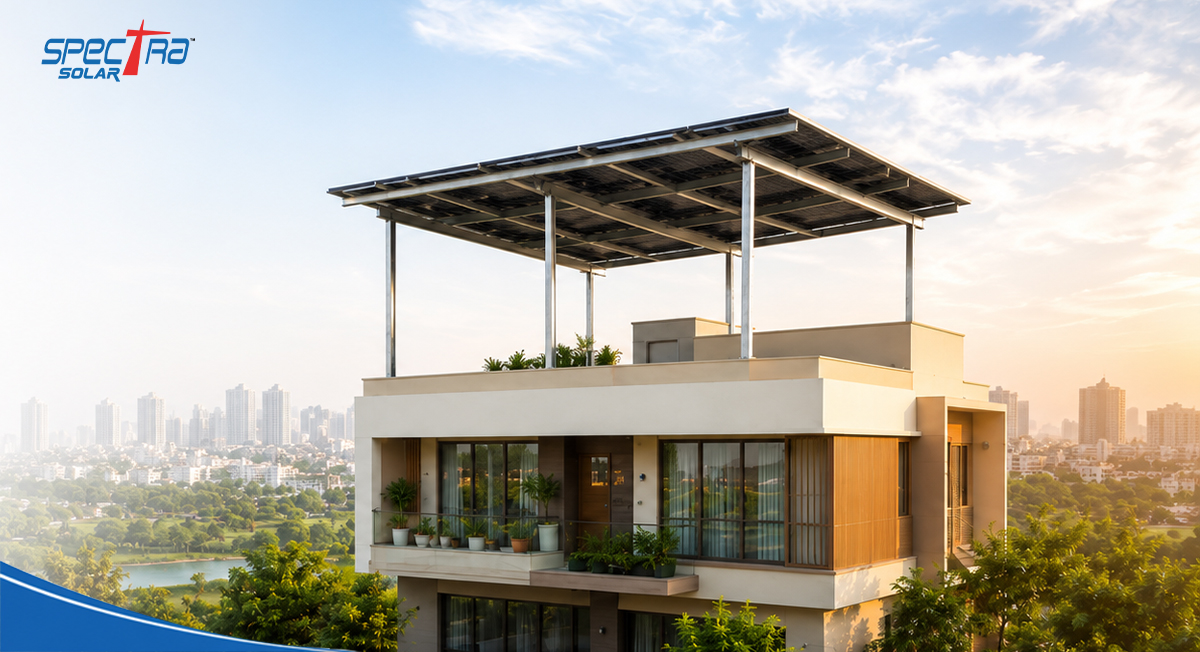
Managing a home in Gurgaon means facing one unavoidable financial hurdle: the sheer cost of running multi-ton air conditioners during a 45-degree summer. Whether you live in an independent floor in DLF Phase 3 or a villa off Golf Course Extension Road, keeping the house liveable forces your power usage straight into the highest DHBVN tariff slabs. By the time July hits, you are no longer just paying a utility bill; you are essentially burning a massive chunk of disposable income just to keep the lights on.
Continuing to rely completely on an expensive, overstretched state grid is a losing financial game. That is why shifting to a solar panel for residential properties has become a straightforward survival strategy for local budgets.
By using your roof to generate your own electricity, learning how to cut power bills by 80% with solar panels becomes a practical math equation rather than a distant goal. This guide cuts straight to the facts on how to permanently lower your monthly overheads.
The Rising Financial Burden of Gurgaon Homes
Managing a modern household in Haryana comes with steep operational costs. The state utilities employ a slab-based tariff system, meaning that the more electricity your family consumes, the higher the rate per unit becomes. During peak summer months, a typical three or four-bedroom home can easily bridge into the highest consumption brackets, resulting in exorbitant monthly liabilities.

The solar panel installation guide for homes makes the main financial benefit obvious: you immediately slash your recurring utility costs. Instead of paying endlessly for expensive, coal-fired grid power, you shift to a one-time equipment purchase that captures daily sunlight. Moving away from utility dependence locks in a permanent defence against future rate hikes, flattening your monthly household expenses for the next twenty to thirty years.
Evaluating Your Home for Solar Readiness
Before reaching out to local clean energy providers, a bit of basic groundwork helps determine exactly what your roof can support. Sunlight is the raw fuel for your system, so spatial constraints and shading play a massive role in future performance.
Shadow Analysis and Clear Space
Before you buy any gear, look closely at your roof space between 9:00 AM and 4:00 PM. Sunlight is your system's fuel, so you cannot afford to have high-rise flats, trees, or water tanks blocking it. If shadows cover your roof during these peak hours, your power output drops fast. As a general rule of thumb, plan for about 100 square feet of wide-open, unshaded space for every single kilowatt (kW) of capacity you want to set up.
Structural Soundness
Solar arrays are built to endure decades of harsh weather, meaning the mounting structures and panels add a consistent weight load to your property. Most reinforced concrete roofs in the National Capital Region handle this easily, but older or temporary structures require a professional load assessment first.

Step-by-Step Blueprint: The Installation Process
Switching your home over to clean energy boils down to a fast, well-timed engineering setup that swaps your reliance on the grid for your own rooftop power. Navigating a residential solar installation in Gurgaon simply means moving through a few practical, standardised engineering steps without throwing a wrench into your family's normal daily schedule.
Phase 1: Site Mapping and Consumption Audits
Before ordering any hardware, engineers run a detailed site assessment and audit your past energy bills to scale the system perfectly to your actual habits. They check your roof configuration and ensure a true southern tilt to maximise sun capture, preventing under-sizing, which leaves you reliant on the grid, or over-sizing, which extends your financial payback period needlessly.
Phase 2: System Customisation and Component Matching
Next, the strategy shifts to tailoring your hardware ecosystem. Choosing a high-efficiency solar panel for residential properties, specifically a premium monocrystalline configuration, is a deliberate choice to wring every drop of wattage out of tight square footage. In this design room phase, technical layout artists sketch out the exact physical path for heavy-duty, weather-shielded cabling. They also pinpoint a shaded, breezy spot for the inverter unit, deliberately mitigating operational thermal load before a single tool arrives on-site.
Phase 3: Structural Anchoring and Heavy Framing
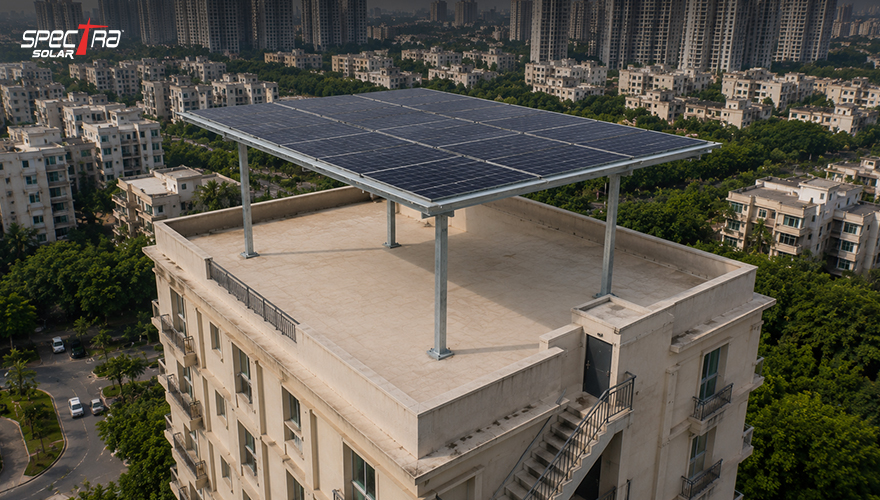
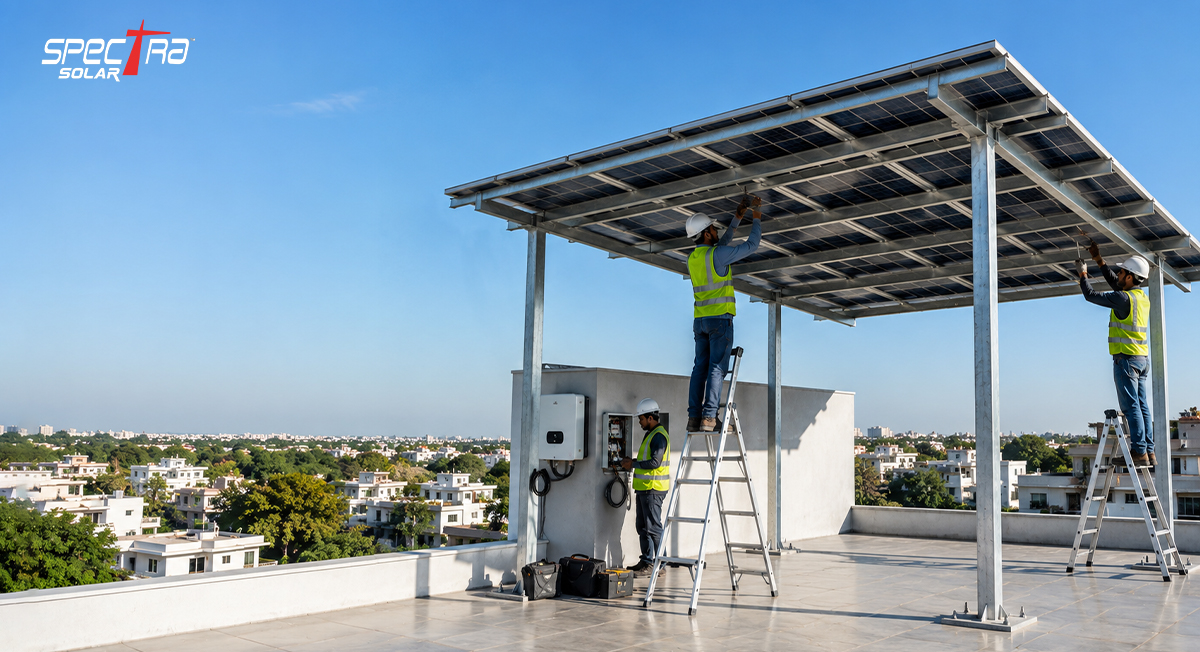
Actual on-site labour starts by anchoring the system tracking directly into your roof. The installation crew mounts heavy, rust-resistant galvanised iron or structural aluminium rails straight into the concrete slabs. This metal framework is engineered to take a beating from the local environment, surviving fierce summer dust storms and intense monsoon downpours without budging. Fastening this racking securely is the only way to keep your panels locked down at the precise angle required to catch maximum sunlight year-round.
Phase 4: Inverter Integration and Grid Synchronisation
Next, the team hooks up the solar modules to your main inverter, turning the whole concept of how to install solar panels at a home in Gurgaon into a practical, working system. Think of this inverter as the actual brain of the setup. It takes the raw, fluctuating Direct Current (DC) electricity coming off your roof, cleans it up, and instantly switches it into stable Alternating Current (AC) power that safely runs your lights, fans, and heavy appliances.
Phase 5: Net Metering Approval and Grid Commissioning
Once the physical assembly is complete, an application is submitted to the local electricity distribution company (DISCOM) for a net meter. This special dual-direction meter tracks both the power you pull from the grid and the surplus green energy you feed back into it.
Demystifying Net Metering in Haryana
Net metering is the financial engine that makes household clean energy highly profitable. Think of the utility grid as a massive, communal energy bank. During bright, clear afternoons, your system will often produce far more electricity than your home actually consumes.

Instead of letting that excess power go to waste, net metering automatically routes it out to the city grid. Your utility meter literally runs backwards, banking energy credits for your household. When the sun goes down, and your system stops generating, you simply draw energy back from the grid, utilising those banked daytime credits to offset your nighttime consumption.
Finding the Right Partner Among Solar Companies in Gurugram
Finding a solid setup in Haryana means looking past the cheapest sticker price you see on a flyer. Because these rooftop arrays are supposed to sit out in the elements and crank out power for up to 25 years, cutting corners on the initial engineering or picking a fly-by-night crew is a recipe for a massive headache down the line.
When sorting through the crowd of solar companies in Gurugram, you need to ignore the sales pitches and focus entirely on technical capability and whether the team will actually pick up the phone when you need help years from now.

Expanding Horizons: Commercial and Industrial Solutions
While individual homeowners enjoy massive relief from rising utility expenses, the financial arguments for clean energy become even more compelling at a larger operational scale. Businesses, manufacturing plants, and large corporate offices face steep commercial tariffs that directly squeeze their net profit margins.
For businesses trying to anchor their operational overheads across Udyog Vihar or IMT Manesar, ignoring a massive concrete rooftop is an expensive mistake. Retrofitting commercial solar rooftop systems essentially repurposes unutilized real estate assets, turning empty space into an aggressive, cost-cutting engine. This scale of deployment allows enterprises to lock down a flat, predictable cost per unit for decades, completely removing corporate cash flows from the volatility of local utility grid spikes.
The same cold math works for heavy manufacturing plants. Mounting heavy-duty solar panels for industries on a factory roof hits two major targets at once: it checks off your corporate green mandates immediately and wipes out those brutal peak-load surcharges utilities slap on you during the busiest daytime production hours.
It does not matter if you are managing a regular suburban home or running a high-output manufacturing line; the core financial rule stays the same: when you own your own power source, you completely shield your operational costs from inflation.
Financial Returns and Long-Term Value
Investing in a household clean energy system provides a financial return profile that easily outperforms traditional fixed deposits or conservative mutual funds.
|
System Capacity |
Average Covered Space Needed |
Estimated Annual Savings |
Typical Payback Timeline |
|
3 kW Array |
~300 Sq. Ft. |
₹35,000 - ₹45,000 |
4 to 5 Years |
|
5 kW Array |
~500 Sq. Ft. |
₹65,000 - ₹85,000 |
4 to 5 Years |
|
10 kW Array |
~1000 Sq. Ft. |
₹1,30,000 - ₹1,70,000 |
3.5 to 4.5 Years |
Because high-quality panels carry performance warranties extending up to 25 years, the system continues to generate completely free electricity long after the initial equipment costs are fully recovered. This turns a simple home improvement project into a highly productive financial asset.

Engineering Your Independence with Spectra Solar
Going solar is fundamentally a structural intervention. Your roof is about to become a miniature, high-tech utility station exposed to some of the most unforgiving climate shifts in northern India. That reality is why cookie-cutter kits and off-the-shelf bundles invariably underperform. At Spectra Solar Power, the entire operating philosophy centres on custom engineering, treating your unique structural footprint as a standalone infrastructure project.
Every single variable matters during the planning phase. The precise layout of your parapet walls, micro-shadows from surrounding structures, and regional ambient temperatures all dictate how your system is configured. By avoiding generic templates, the design team maximises every square foot of sun capture, matching high-efficiency materials to the specific thermal demands of the local region.

Crucially, the relationship with a clean energy partner does not conclude when the last connection is secured. Panels face continuous environmental challenges, with seasonal dust buildup and localised particulate matter threatening to quietly choke your system's output. While many providers disappear once the net meter is commissioned, Spectra Solar remains actively involved through dedicated post-installation care.
Instead of waiting for a massive spike in your utility bill to signal a system issue, the brand institutes proactive engineering workflows. Technical teams conduct structured, comprehensive health checkups across the entire asset. The crew checks high-voltage lines under load, tracks how well the inverter sheds heat, and makes sure the roof mounts are not loosening up. Catching these small technical issues early is what keeps your equipment running at full capacity, keeping your monthly power savings steady for decades.
If you want to permanently halt unpredictable utility overheads and are ready to discover how to install solar panels at a home in Gurgaon, team up with a veteran crew that handles the heavy lifting seamlessly. Connect with the experts at Spectra Solar this week to arrange a detailed rooftop analysis and claim absolute control over your household energy future.

Share This Article


Ready to switch to solar?
Get a free site assessment and no-obligation proposal within 48 hours. Our team covers 100+ cities across India.
-
 Plot No. 2, Landmark Tower, 2nd Floor, South City-1, Ashok Marg, Gurugram, 122001, Haryana
 -

-

RELATED BLOGS