Solar for Pharmaceutical Plants in UP: DCR Compliance, Energy Savings, and Zero-Investment Options

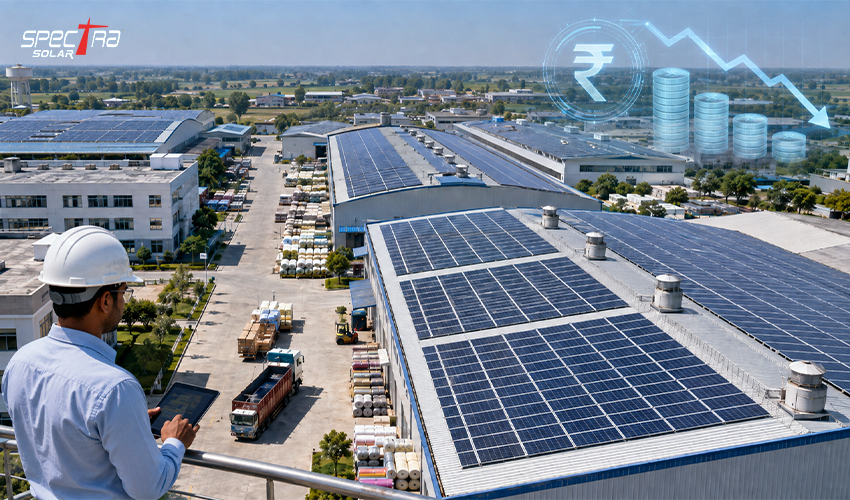
Running a pharma plant in UP is no walk in the park. Between keeping drug inspectors happy, running massive cleanroom HVAC systems non-stop, and keeping heavy gear powered 24/7, your power bills turn into an absolute monster of a monthly expense. For any plant head or director staring down the numbers, electricity isn't just a basic utility bill anymore; it's a massive drain chewing straight into your profit margins month after month.
The traditional approach to managing these expenses involved routine monitoring and minor efficiency tweaks. However, with power tariffs steadily climbing across industrial sectors, incremental changes are no longer enough to protect bottom lines. The perspective within the manufacturing sector is shifting from passive cost containment to active, decentralised energy generation.
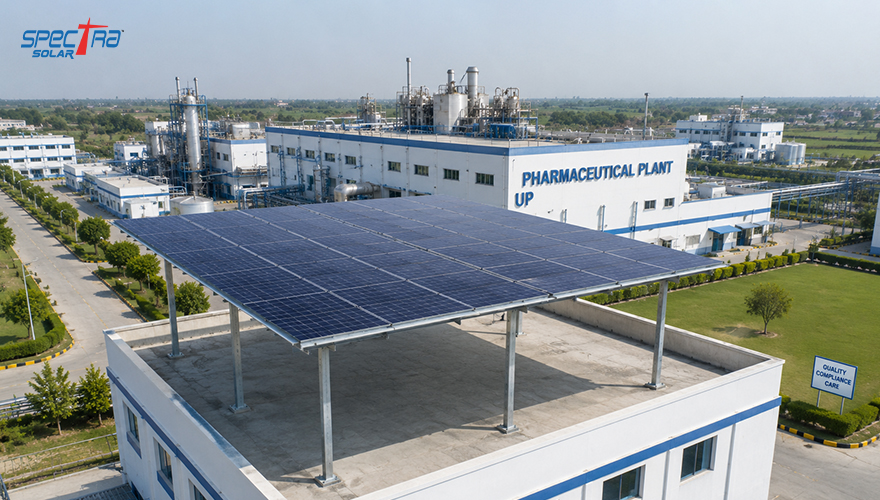
Adopting solar for pharmaceutical plants in Uttar Pradesh offers a structural remedy to escalating power costs. By leveraging the state's abundant solar irradiance and progressive industrial policies, manufacturing units can fundamentally change how they power their operations while achieving long-term sustainability goals.
Understanding the Energy Demands of Pharma Manufacturing
Pharma plants don't run like your average warehouse or auto parts factory. Because of strict quality rules, they've got to keep cleanroom HVAC units humming 24/7 to lock down exact temperature and humidity ranges, plus make sure sensitive batch gear and lab rigs never drop power mid-cycle.
When you plot out a typical day's power draw, the baseline load is massive. Sterilisers, raw material fridge banks, and non-stop water purification loops pull heavy juice around the clock. Sticking purely to the local utility grid for all that power is a gamble; you're just sitting duck for sudden tariff spikes, voltage dips, and brutal peak-demand fines.
Integrating a dedicated commercial solar power installation serves as a practical buffer against these operational risks. By producing clean energy right on the roof or ground, plant managers can slash grid dependence during expensive daylight hours and secure predictable energy expenditures over the long haul—much like smart factory directors who weigh up on-grid vs off-grid solar systems before building out their utility strategy.
Additionally, smart engineering practices enable photovoltaic arrays to tie directly into existing facility substations. This cuts out internal transmission loss across sprawling manufacturing campuses, making sure that heavy-draw gear gets stable, reliable juice right when commercial grid tariffs hit their daily high.
Navigating DCR Compliant Solar for Pharma Companies in UP
For pharmaceutical companies looking to transition to renewable energy, compliance is paramount. In government-backed and subsidised or specific institutional frameworks, project developers must adhere to Domestic Content Requirement (DCR) norms. Utilising DCR-compliant solar for pharma companies in UP ensures that the photovoltaic modules and solar cells used in the installation are manufactured domestically within India.
Compliance matters for several critical reasons:
-
Long-Term Asset Security: Dealing with international warranty claims is an absolute nightmare of shipping fees, customs hold-ups, and overseas support desks. Buying from domestic Tier-1 brands keeps things local, meaning if a panel fails, getting a replacement or filing a claim doesn't require a master's degree in import-export logistics.
-
Quality Assurance: India's domestic solar manufacturing has genuinely levelled up over the last few years. Today's high-efficiency panels are built tough; they handle the brutal northern Indian summer heat and the thick layer of dust and industrial smog without coughing up a lung or tanking your daily yield.
-
Regulatory Compliance: Navigating state policies and central mandates is tricky business. Teaming up with established solar EPC companies in India means your entire engineering, procurement, and construction run stays locked tight with current rules, saving you from nasty regulatory roadblocks down the road.
Choosing established solar EPC companies in India ensures that your plant's entire engineering, procurement, and construction lifecycle complies strictly with current regulatory frameworks, avoiding costly compliance bottlenecks later.
Financial Flexibility: Zero-Investment Solar Models
Capital expenditure allocation is always a tightly contested subject in corporate boardrooms. Allocating a massive upfront budget for a multi-megawatt rooftop or ground-mounted solar array can delay sustainability initiatives, even when the long-term return on investment is clear and undeniable.
This is where alternative financial structures change the corporate equation. Opting for zero-investment solar for pharmaceutical factories allows plant owners to bypass upfront capital expenditures entirely through a Renewable Energy Service Company (RESCO) framework.
Under the RESCO model, experienced RESCO model solar companies in India handle the heavy lifting; they foot the bill, install the panels right on your factory roof or empty yard, and keep the whole rig running without you spending a dime upfront. Your pharma plant just locks into a long-term Power Purchase Agreement (PPA) to buy the solar juice at a rate way cheaper than what the local utility board charges for industrial power.
-
Immediate OpEx Savings: You start pocketing savings on day one because your per-unit energy cost drops instantly, leaving your capital budget untouched so you can pump funds back into core R&D instead of hardware.
-
Zero Maintenance Burden: You can completely wash your hands of the day-to-day upkeep. The developer takes over everything, washing the dust off the panels, swapping out inverters, watching the live feeds, and carrying the insurance weight.
-
Risk Mitigation: If panels degrade faster than expected or a technical glitch pops up, it is entirely on the service provider's head. They absorb the performance risk so your power output stays steady and predictable.
Maximising Energy Savings with Solar for Pharma Plants in Uttar Pradesh
The financial rationale extends far beyond basic power bill reductions. Achieving substantial energy savings with solar for pharma plants in Uttar Pradesh impacts the broader operational balance sheet and enhances corporate ESG profiles.
Industrial tariffs in UP feature steep demand charges and time-of-day (ToD) tariffs during peak daylight hours when commercial activity surges. Because pharmaceutical manufacturing operations run during these exact peak hours, solar generation matches your highest consumption periods precisely when grid power is most expensive.
To visualise how different deployment methodologies compare for an industrial facility, consider the following detailed breakdown:
|
Parameter |
CapEx (Direct Purchase) Model |
RESCO (Zero-Investment) Model |
|
Upfront Capital |
High initial investment required |
Zero upfront capital expenditure |
|
Asset Ownership |
Owned directly by the pharma company |
Owned by the solar developer/third party |
|
O&M Responsibility |
Handled internally or via separate AMC |
Fully managed by the RESCO provider |
|
Savings Realisation |
Maximum long-term savings per unit |
Immediate, risk-free tariff savings |
|
Balance Sheet Impact |
Adds fixed assets/depreciation benefits |
Treated as an operational expense (PPA) |

Engineering Commercial Solar Systems for Production Environments
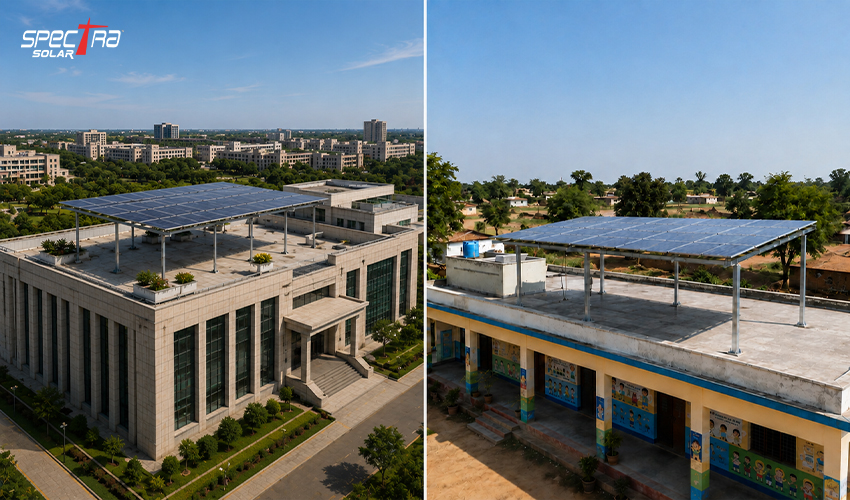
Setting up a solar panel system for commercial buildings at a pharma site isn’t just a plug-and-play job; it takes serious site planning to keep everyday operations safe. Roofs above sterile cleanrooms usually can't take heavy point loads, and trying to lay panels around roaring exhaust ducts, sprawling ventilation runs, and maze-like plumbing is a headache.
That's why bringing in seasoned solar EPC companies in India is crucial before you drill a single bolt. They actually run proper structural audits that factor in local wind shears, dead-weight limits, and UP's seismic zone quirks. Once everything is bolted down, having smart string-level monitoring on the ground is a game-changer; it flags dirty panels or failing strings instantly so you don't lose out on hard-earned power.

Conclusion: Powering the Future of Pharma with Spectra Solar Power
Transitioning a pharmaceutical manufacturing plant to clean energy demands a capable partner who can navigate strict regulations and execute technical plans flawlessly. At Spectra Solar Power, we specialise in delivering custom, turnkey solar systems built to match the tough standards of heavy manufacturing. Whether your facility opts for an outright CapEx setup or a flexible RESCO contract, our team ensures full DCR compliance, secure installation, and peak daily uptime. Get in touch with Spectra Solar Power today to learn how we can upgrade your facility's energy framework.
Frequently Asked Questions
Will solar power generation interfere with sensitive pharmaceutical manufacturing equipment?
Not at all. Certified solar EPC companies in India deploy advanced, grid-tied pure sine-wave inverters paired with dedicated isolation transformers, supplying clean, stable electricity completely free from harmful harmonic feedback.
How does the RESCO model affect our company's balance sheet?
Under a standard RESCO arrangement, your facility only pays for the clean units actually consumed through a formal PPA. This channels the expense through routine operating costs instead of locking up capital as a fixed liability, leaving your borrowing lines open for core lab machinery.
Are DCR-compliant solar modules durable enough to handle industrial pollution and dust in UP?
Industrial belts in UP are notoriously harsh on outdoor gear—between the heavy coal soot, regional smog, and general dust storms, cheap panels don’t last five minutes. But certified DCR modules are built strictly to take a beating. They’re put through brutal factory stress tests, packed with strong PID (potential-induced degradation) defences, and fronted with tough-as-nails tempered glass that shrugs off thick particulate buildup and brutal summer heat without losing its edge.
What happens to solar generation during cloudy days or monsoon seasons in Uttar Pradesh?
Let’s be real, when a massive UP downpour hits, or the sky stays pitch black for days during peak monsoon, your solar numbers are going to take a hit. You aren't getting blazing sunshine, but the system doesn't just shut down. The panels still pull in whatever indirect daylight is filtering through the clouds. And because you're tied right into the main grid, nobody on the shop floor is going to notice a thing. The setup just automatically fills the gap with grid power so your batch mixers and packaging lines keep rolling without missing a beat.
How long does a commercial solar installation take for a large manufacturing plant?
As for how long the actual build takes, a big manufacturing plant usually looks at a 3- to 6-month window from the first blueprint to final grid commissioning. Naturally, that timeline shifts a bit depending on how many megawatts you're pushing, how fast local power boards clear your files, and getting those UP net-metering approvals pushed through.

Share This Article


Ready to switch to solar?
Get a free site assessment and no-obligation proposal within 48 hours. Our team covers 100+ cities across India.
-
 Plot No. 2, Landmark Tower, 2nd Floor, South City-1, Ashok Marg, Gurugram, 122001, Haryana
 -

-

RELATED BLOGS