Run Your AC, Cooler with Solar Power and Cut Electricity Bills to Zero This Summer

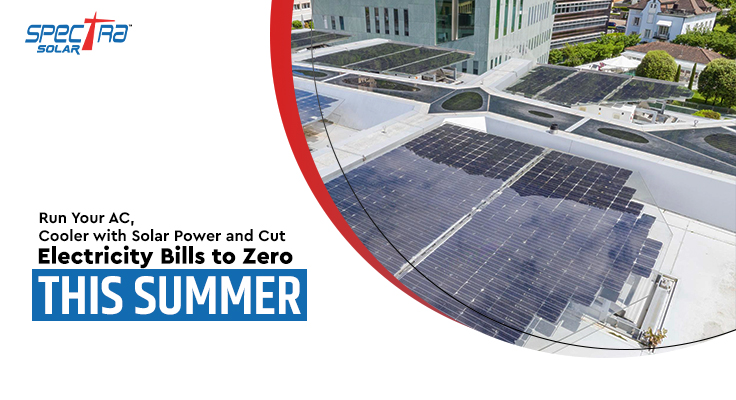
There is something almost predictable about the way summer electricity bills land. You know it is coming. You brace for it a little. But when the number actually shows up, it is still a quiet shock. Two months of running the AC through the night, the cooler through the afternoon, the refrigerator working overtime, and the bill reflects every single hour of all of it.
The conversation around solar panels for home electricity saving has been growing for years, but for most households, it still sits somewhere between "something to look into" and "something to actually do." This piece is for the second group. People who are ready to understand what it takes, and whether a rooftop solar setup can genuinely absorb the summer load.
The Real Reason Summer Bills Climb So Fast
India receives close to 300 sunny days a year. That figure matters for two opposite reasons: it is why cooling costs are high, and it is also why solar saves on electricity bills so decisively during summer. The same intensity of sunlight pushing your AC to run longer is the same resource powering your panels.
A 1.5-ton split air conditioner draws between 1.2 and 1.5 kilowatts per hour, depending on its star rating. Run it for eight hours a day, and you are adding 10 to 12 units to daily consumption from that appliance alone. A desert cooler pulls roughly 0.18 to 0.25 kW per hour, far less. But running together, alongside a refrigerator, fans, lights and a television, can take a household to 300 to 500 units a month without much effort.
State electricity tariffs in India are structured progressively. The first 50 to 100 units each month are billed at the lowest slab rate, and every unit beyond a threshold is billed higher. Heavy summer consumption does not just add units. It pushes you into more expensive slabs, which is the exact mechanism that makes reducing the electricity bill with solar panels so financially effective for high-cooling households.
Figuring Out the Right System Size for an AC and Cooler
A 1 kW solar system in India generates approximately 4 units per day under normal sunlight. A household looking to run a solar system for AC and a cooler simultaneously, alongside standard home loads, typically needs a system between 3kW solar system and 5 kW solar system, depending on AC usage duration and geographic location.
In high-irradiance zones like Rajasthan and Gujarat, a 3 kW setup produces 12 to 14 units a day through summer. In cities with lower radiation averages, the same system yields 10 to 11 units. For a home running one 1.5-ton AC for six to eight hours during daylight and a cooler for four to six hours, a well-installed 3 kW on-grid rooftop solar system electricity bill saving arrangement covers the bulk of daytime consumption directly.
Two ACs in operation, or usage extending into evening hours, make a 5 kW system the more appropriate choice. Net metering handles the rest: surplus generation during the day is exported to the grid and credited against what you draw at night. This is precisely how to save electricity bills using solar power without battery storage. Using a Solar Calculator matched to your city, roof area and consumption pattern gives a more reliable estimate than general figures.
Why On-Grid Systems Are the Practical Choice for Cooling

A common misconception is that solar means going off-grid solar system. In most urban and semi-urban scenarios, that is neither necessary nor the most economical path. For a household that already has a grid connection and wants to use a solar system for AC running primarily to lower its bills, an on-grid setup without battery storage is the standard recommendation.
No battery means the capital cost is lower, the system is simpler to maintain, and the only mechanism needed to handle evening consumption is net metering credit accumulated during the day. The question of solar power for AC electricity saving largely comes down to getting the system size right and ensuring panel quality holds over time.
What sets summer apart as the ideal time to realise this benefit is the alignment between generation and demand. Solar panels produce the most on bright, long summer days. ACs run hardest on those same days. That synchronisation is structurally why a summer-heavy electricity bill responds so well to solar generation.
Can You Actually Get to Zero on the Electricity Bill
Solar system for zero electricity bill is a phrase that appears often in solar marketing. It is also genuinely achievable. Whether it happens in practice depends on how accurately the system is sized relative to actual consumption and on the net metering policy of the relevant DISCOM.
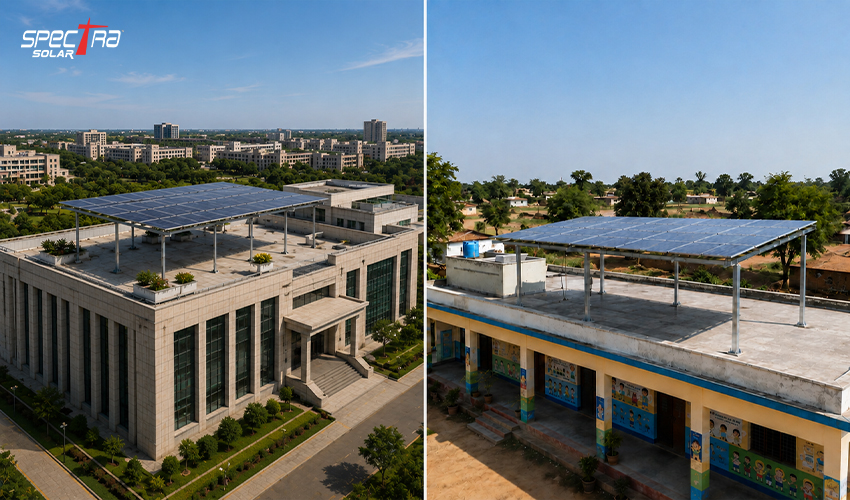
A 5 kW rooftop system in most Indian cities generates between 600 and 700 units per month during peak summer. For a household whose consumption sits within that range, direct solar use during daylight combined with net metering credits for exported surplus can bring the payable bill to zero or to just the fixed connection charge. The PM Surya Ghar Muft Bijli Yojana provides central subsidies that reduce upfront costs for residential installations, with systems up to 3 kW attracting the highest proportion. Several states add further incentives on top.
Factors that affect solar prices include panel type, inverter quality, existing roof structure, wiring requirements and state-specific charges. These mean final installation costs vary. But payback for most well-sized residential on-grid systems currently runs between four and six years, with system lifespans of fifteen to twenty-five years. The arithmetic after payback is straightforward in the household's favour.
When You Have a Cooler Instead of, or Alongside, an AC
A desert cooler does not complicate the solar sizing exercise much. It draws so little relative to an AC that any system dimensioned for air conditioning will accommodate a cooler without adjustment. For households where a cooler is the only active cooling appliance and an AC is not planned, a 1 kW to 2 kW system may cover the entire consumption comfortably.
That said, the pattern across urban India is shifting. Coolers are being supplemented or replaced by ACs as summers grow more intense. Sizing a system with one AC in mind, even if you are currently running only a cooler, avoids an upgrade later. The benefits of using solar power include modularity, but expanding a system after the fact costs more than sizing correctly at the outset.
Solar Panels Maintenance During Summer Months

Summer is also when panel output degrades most from neglect. Dust accumulates faster in dry months, and a film across the panel surface can reduce output by 10 to 20%. For a household relying on solar to run the AC, that reduction is material. A 3 kW system losing 15% output to dust is effectively a 2.5 kW system, which may no longer cover daytime AC load.
Solar panel maintenance services for residential setups typically involve surface cleaning, inverter health checks and string current measurements. In high-dust areas like North India, cleaning once a month through April to June is advisable. Not a demanding process, but one that should be scheduled rather than reactive.
Solar Panels Maintenance For Commercial and Industrial Properties
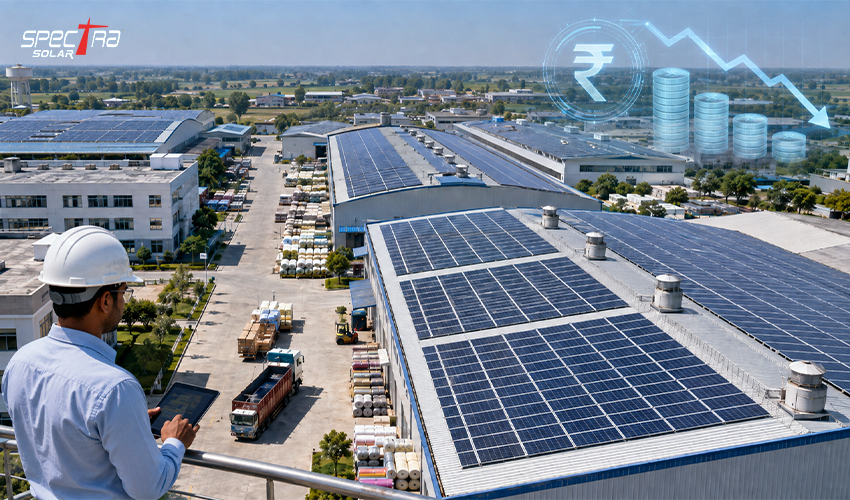
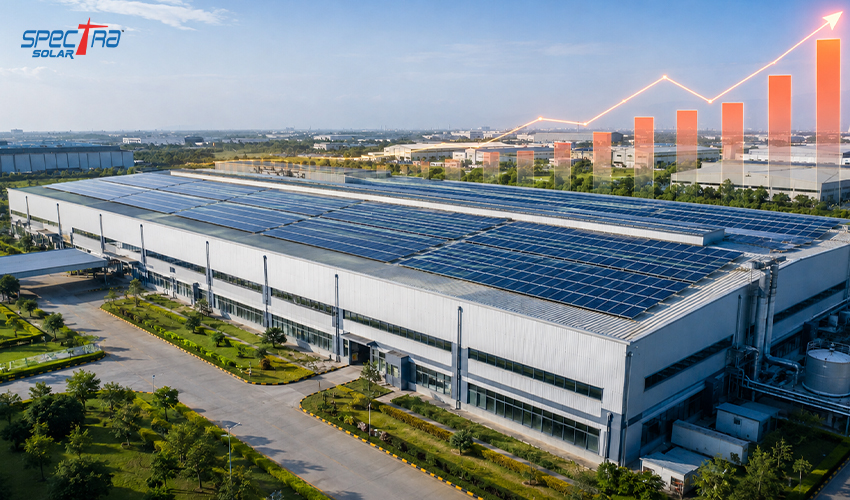
The same logic scales to commercial solar rooftop systems. An office, retail establishment, or factory running cooling equipment through summer carries electricity bills far beyond what any household sees. Commercial tariff rates are also typically higher per unit than residential ones, so each unit of solar generation offsets a larger rupee amount.
For solar panels for industry in India, payback often occurs within three to five years even without subsidy, purely because the consumption volumes are high and the per-unit cost of electricity is steep. Understanding what is solar billing under net metering in the commercial context, including how exported surplus is credited and what DISCOM regulations allow, is essential planning groundwork before sizing an industrial or commercial system.
How to Pick Which Solar Company to Work With
The technology of solar is fairly standardised. What varies between installers is the quality of the site assessment, the accuracy of the sizing recommendation, the grade of components actually supplied against what was quoted, and whether the service relationship holds after commissioning.
Spectra Solar Power has worked with residential solar panels for residential clients, commercial establishments and industrial facilities across multiple states. Their process begins with an on-site assessment that accounts for roof area, shading at different times of day, current sanctioned load and actual consumption before a system recommendation is made. Subsidy documentation and DISCOM approval processes are handled as part of the installation, not left to the customer to navigate independently.
Whether it is a question of solar system for home price or the specifics of how a 5 kW system will perform on a particular roof in a particular city, the starting point is a conversation with someone who can run those numbers against your actual situation. Among the top solar companies in India currently active in the residential and commercial rooftop segment, Spectra's site-first approach is what separates a correctly sized, performing system from one that looks right on paper and underdelivers through August.
This summer is going to be expensive if you do nothing. The calculation for doing something has never been more straightforward.

Share This Article


Ready to switch to solar?
Get a free site assessment and no-obligation proposal within 48 hours. Our team covers 100+ cities across India.
-
 Plot No. 2, Landmark Tower, 2nd Floor, South City-1, Ashok Marg, Gurugram, 122001, Haryana
 -

-

RELATED BLOGS